

4.7 Characteristics of effective changemakers
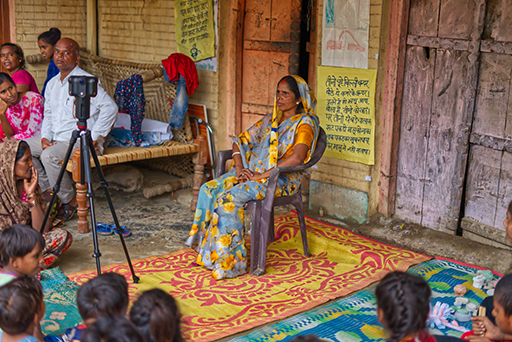
What drives a changemaker? What drives you?
Some changemakers are driven by their struggle for survival and the defence of their own rights; others by their values, personal experience, a sense of social or political justice or a personal moral compass that distinguishes what they believe is right and wrong and inspires a belief in the changes they want to see. Some are inspired by their religious faith, by social movements or organisations they are part of, and/or perhaps by people they have met in their lives.
The importance of self-care and collective-care
Having the resilience to deal with setbacks or even attacks, experiencing and learning from failure, and managing the anxiety of uncertainty are valuable skills for an effective changemaker. It’s about taking calculated risks, perhaps acting outside your comfort zone and having the persistence and courage to challenge the status quo. How we each handle the frustration, stress, and anger that often comes with wanting change to happen, while keeping our thinking clear and our actions appropriate to the task in hand, is very important.
The kinds of risks faced by activists vary hugely of course. People willing to speak out in insecure or autocratic countries may face intimidation, threats or worse. Some need to flee the country. Even in countries and contexts which appear secure, change is disruptive and responses will vary.
Whatever their situation, changemakers need to stay safe, maintain energy, and vision and prevent burnout and disillusion. Taking good care of ourselves and each other is a vital part of activism. As the Black feminist writer Audre Lorde said, ‘caring for myself is not self-indulgence, it is self-preservation, and that is an act of political warfare’.
Remember, you’re in this together with others. A benefit of working collaboratively is the opportunity to share the burden and to check up on each other regularly. After all, there is great comfort in solidarity. It’s important that as a group of changemakers you build collective-care strategies into your activism – how are you going to support each other, especially when times are tough? Maintaining morale in the face of adversity and over a long time period can be a challenge, so celebrating small wins together is an important tool in keeping hope alive.
Cultivating curiosity
Curiosity, humility, self-awareness and openness to a diversity of viewpoints are important characteristics active campaigners for change need. Curiosity about the world needs to be laced with humility and self-knowledge. We don’t – can’t – have all the answers; we can’t predict events; what works in one place won’t work in another.
As we know from the unit about ‘dancing’ with systems, we need to become comfortable with messiness and uncertainty. We need to include a diverse range of people and viewpoints in any discussion and, however busy we are, take regular time-outs to observe, reflect and assess what is or isn’t working and change direction accordingly.
Looking hard, listening, asking questions, and thinking critically about the answers you are given are invaluable skills. It means having the ability to ‘accept the unexpected’ and listening to feedback so that you can adjust your strategies and tactics based on what you have learned and to also take advantage of opportunities that arise.
Understanding our human rights
Last but not least, changemakers need to be aware and informed of their rights and the rights of people they are working with. Speaking out, participating in campaigning activities and actively working for these rights, especially when they are under threat, is part of being an active changemaker. Everyone is entitled to these rights, without discrimination.
4.6 How do you harness the power of collective action?

