
Acknowledgements
Designing Mixed Methods Studies was created by Dr Duygu Bektik and Prof. Christothea Herodotou (Institute of Educational Technology, The Open University, UK) as part of the Research Capability Hub. This course is licensed on a Creative Commons Attribution 4.0 International license, unless otherwise stated.
Image attributions
The following images are used under the Unsplash License:
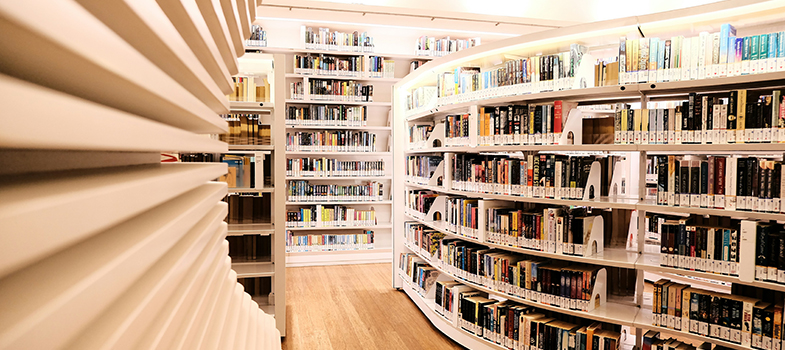
- Course image: A library filled with lots of books and a spiral staircase by Anisa Gauri on Unsplash.
- 2.1 Four ways of knowing: A close up of a piece of paper with arrows by Joachim Schnürle on Unsplash.
- 2.3 The methodology continuum: Vertical stripes of green, yellow, and red light by Juzzepo on Unsplash.
- 2.6 Why pragmatism matters: A bunch of wrenches and other tools in a box by Isabela Kronemberger on Unsplash.
- 3.1 What makes a study "mixed methods"?: A river flowing through a lush green valley by Prasanta Kr Dutta on Unsplash.
- 3.3 Three core mixed methods designs (Convergent design): A person holding two pieces of a puzzle by Vardan Papikyan on Unsplash.
- 3.5 Purposes of mixing methods: A prism refracts light into a rainbow spectrum by Artem on Unsplash.
Further information and acknowledgements
The authors thank the reviewers, Dr Craig Walker, Dr Saraswati Dawadi and Prof Bart Rienties, for their detailed feedback, and colleagues across the Research Capability Hub and the Institute of Educational Technology for their support during development.
Claude Opus 4.8 (Anthropic), a generative AI tool, was used to help develop the house analogy (section 1.3) and the soup analogy (section 1.5) in Unit 1. The authors reviewed, edited and verified all AI-assisted material and take full responsibility for the content of this course.