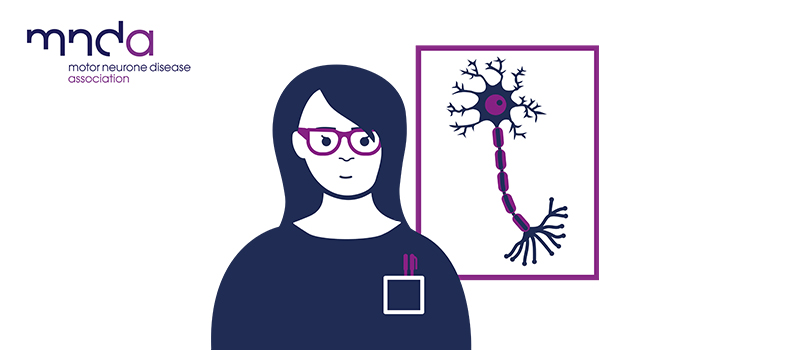
What is motor neurone disease (MND)?
View
 This book resource will introduce you to motor neurone disease (MND), a progressive and life-limiting neurological condition. You'll learn what MND is, who it affects, how it presents, and the different forms it can take. This foundational knowledge will support your understanding of the challenges faced by those living with the disease.
Classification of MND
How is MND classified?
MND can be grouped in two key ways. Click the arrows below to expand the content.
1. By the type of motor neurones affected
- Upper motor neurones (UMN) – originate in the brain and carry messages down the spinal cord to control voluntary movement.
- Lower motor neurones (LMN) – transmit signals from the spinal cord to the muscles to enable movement.
- Or both.
2. By the area of the body first affected
- Limb-onset MND:
- The most common form, affecting around two-thirds of people.
- Symptoms begin in the arms or legs.
- Bulbar-onset MND:
- Affects the muscles used for speech, swallowing, and the tongue.
- Accounts for most of the remaining third of cases.
- Respiratory-onset MND:
- A rare form, affecting around 3% of people.
- Begins with breathing difficulties.
You have reached the end of this resource. Click here to return to the main course page.