What is motor neurone disease (MND)?
 This book resource will introduce you to motor neurone disease (MND), a progressive and life-limiting neurological condition. You'll learn what MND is, who it affects, how it presents, and the different forms it can take. This foundational knowledge will support your understanding of the challenges faced by those living with the disease.
Introduction
To move between pages in the book, use the blue left and right arrows.
Motor neurone disease (MND) is a fatal, rapidly progressing neurological condition that affects up to 5,000 adults in the UK at any given time.
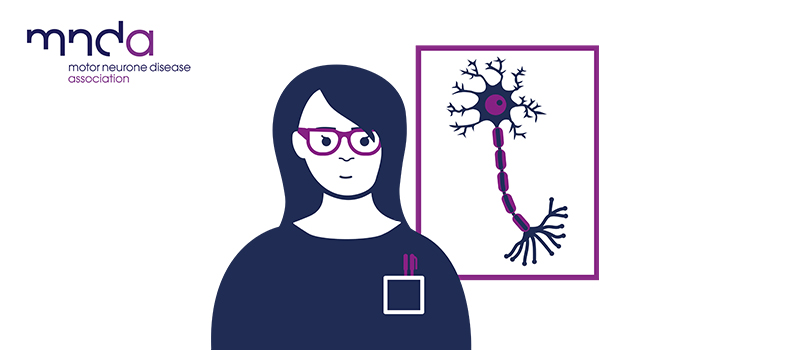
MND damages the motor neurones in the brain and spinal cord that control muscle movement. As these nerves stop functioning, signals no longer reach the muscles. This causes muscles to gradually weaken, stiffen, and waste away.
Over time, people with MND may become trapped in a failing body — unable to move, speak, swallow, and eventually breathe. Some individuals may also experience changes in thinking or behaviour, and a smaller proportion may develop a rare form of dementia.
There is currently no cure.
- A third of people die within a year of diagnosis.
- More than half die within two years.
- A person’s lifetime risk of developing MND is around 1 in 300.
- Each day in the UK, approximately six people are diagnosed with MND — and six people die from it.