
Part 2 - When Communication May Lead to Misunderstanding.
3. Understanding System Bias
Examples of System Bias from the Research
Clarus identifies a number of structural features that can contribute to system bias. It is important to highlight that these do not guarantee unfair outcomes, but they increase vulnerability.
One example is organisational pressure. High workload, time constraints, urgent cases, and large volumes of digital data can push practitioners towards speed over reflection. Under these conditions, there is a greater risk that people focus only on what seems most immediately useful and overlook alternative lines of inquiry or the limitations of a result. Cognitive load, uncertainty, and pressure for rapid results can increase reliance on shortcuts and thereby make biased judgement more likely.
Further Information can be found here.
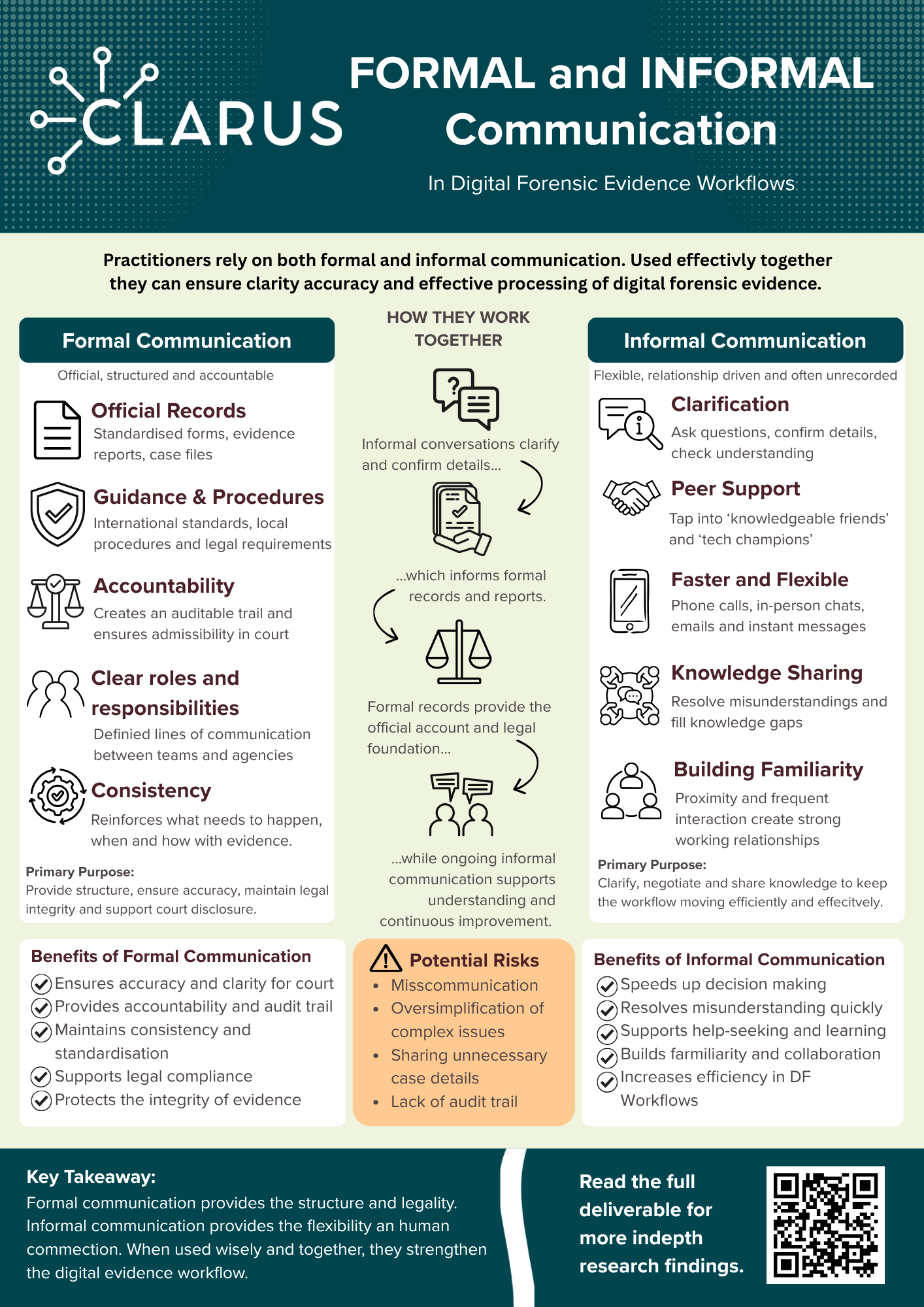
For additional reading options please click here
Another example is hierarchy. In strongly hierarchical environments, people lower down the structure may feel less able to challenge assumptions, question the framing of a case, or push back against expectations from senior staff. Clarus also notes that familiarity between staff from different units, legislative requirements, and workplace culture can either encourage or discourage open communication. For example, legal obligations relating to confidentiality, disclosure, data protection, or evidential procedures may shape what information can be shared, when it can be shared, and with whom. If the system makes it difficult for relevant expertise to be heard, it becomes easier for narrow interpretations to take hold.
Language is another important example. Misalignment in terminology, oversimplification of technical concepts, or overstatement of what digital evidence can show may all shape how evidence is understood. The same term can be understood differently across functions, and that simplifying evidence for non-experts can carry epistemic risks if nuance, uncertainty, or limitations disappear along the way. Tools and infrastructure also matter. Different software may present the same data differently, and weak infrastructure may shape what gets prioritised, retained, or shared, not on the basis of evidential value but because of practical constraints.
What matters here is that these are not marginal issues. They are built into the ordinary working environment. That is why Clarus treats them as systemic rather than incidental or due to mistakes of individuals.
Move to the next page by clicking the arrow on the top right to move to the next page in this section.