
Factors influencing seed longevity
The ability of seeds to germinate diminishes over time in storage. If you take seeds out of storage straight after they went in, they show vigorous germination. After a period spent in storage, the seeds start to show signs of aging. Germination becomes slower and less uniform, and there is a higher chance of abnormal growth. Some seeds age more quickly than others, but eventually, none of the seeds will be able to germinate. Figure 2 (below) shows how this happens:
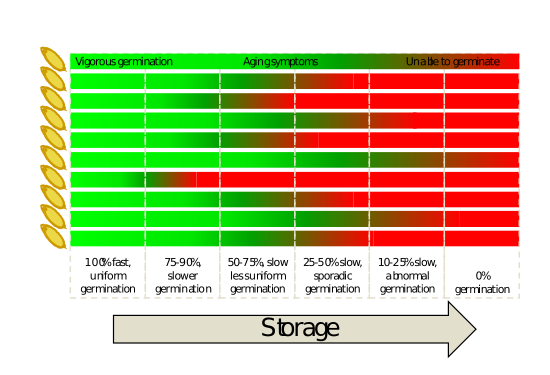
The time it takes for seeds to become non-viable not only varies between individuals, it also varies between species. It can be influenced by storage conditions, but also conditions while seeds are waiting to be harvested and processed, or while they are lying in the drying room. The conditions under which a seed is harvested, processed, dried and stored, can all have an impact on its longevity.
By studying the behavior of different types of seeds, scientists are building up evidence of how, by making small adjustments to conditions during processing, such as temperature and humidity, it is possible to improve longevity. Their promising discoveries are the focus of this course.
There are other factors that can influence seed longevity. The presence or absence of pests and disease is perhaps the most obvious. This takes us into the realms of phytosanitary science, a well-established approach, which genebanks already use to safeguard seed quality. There are other educational packages about these, so they are not the primary concern of this course.
At the most fundamental level, there is tantalizing evidence for the underlying genetic influences on longevity. This allows scientists to glimpse the possibility of using genes to control biochemical pathways that could improve the viability and longevity of crops. If you are interested in finding out more about one of these studies, there is a link in the ‘Useful publications’ section of this module.
Seed survivors