
Find out more about The Open University's Mathematics courses and qualifications
Statistics... What is it? or What Are They?
Most people have some sort of idea, or at least think they have, about what statistics is. But before we get into that, there’s a basic question to answer: is the word ‘statistics’ singular or plural? It looks like a plural because it ends in ‘s’. But ‘mathematics’ and ‘physics’ end in ‘s’, and we don’t talk about one ‘physic’ or one ‘mathematic’.
The words ‘mathematics’ and ‘physics’ are singular and refer to fields of study or knowledge. ‘Statistics’ is also a singular word denoting a field of knowledge.
The statistician Stephen Senn has defined it as ‘the science of quantitative reasoning’ — of ways of thinking about and working with numerical facts and ideas. But ‘statistics’ has a plural meaning as well.
A ‘statistic’ is a numerical fact, or a piece of numerical information or data, and collections of such things are called ‘statistics’ plural.
So statistics (plural) are part of the concern of statistics (singular).
According to Stephen Senn, again, the science of statistics ‘has much more in common with philosophy than it does with accounting.’
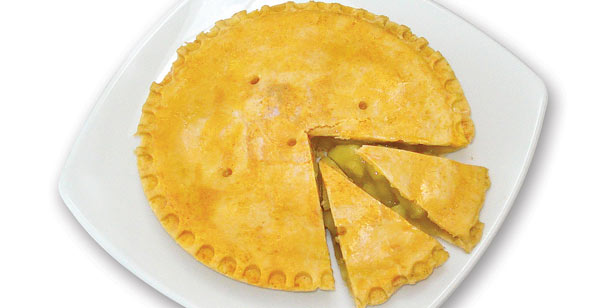
A pie chart made from a pie. [Image by net_efekt under Creative Commons attribution licence]
To illustrate further, let’s think about an example: an opinion poll to find out people’s voting intentions in the next General Election.
The pollsters will interview a representative sample of electors, and ask each of them which party they would vote for if there were an election tomorrow.
For instance, in its regular poll in January 2006, the market and opinion research organisation MORI interviewed 1,955 adults across the UK.
Of the 949 of these who said they would be certain to vote if there were an election the next day, 39% said they would vote Conservative, 35% Labour, 19% Liberal Democrat, and the rest for other parties or candidates.
These numbers are statistics in the plural sense; they are facts about what the interviewed people said. The science of statistics (singular) is concerned with many related issues.
How should the pollsters go about choosing a representative sample of people to interview? How should they ask the questions? Given that they did not interview anywhere near all voters in the country, what confidence should we place in the results?
If there really had been an election the next day, the percentage of people voting Tory probably wouldn’t have been exactly 39%, but how close to 39% would it probably have been?
(Statisticians use probability in answering such questions. Numbers have a certain air of solidity and certainty to them, but conclusions drawn from numbers are very rarely certain, and statistics uses the language of probability to talk about this uncertainty.)
Of course, statistics is concerned with many other areas besides opinion polls. Statistics is used wherever there is quantitative information to be dealt with. Medicine and biomedical science, economics, government, education, psychology, finance, environment, and forensic science are just some of the many areas of twenty-first century life in which statistics and statisticians play a key role.
Study a free course
-
Working on your own mathematics
Learn more to access more details of Working on your own mathematicsThis free course, Working on your own mathematics, focuses on your initial encounters with research. It invites you to think about how perceptions of mathematics have influenced you in your prior learning, your teaching and the attitudes of learners.

-
Mathematics for science and technology
Learn more to access more details of Mathematics for science and technologyMaths is intimately entwined with science and technology, whether it is used to analyse data collected on plants in the Amazon rainforest, to calculate the trajectory of a comet or design a bridge to connect two countries. This means that science and technology go hand-in-hand with maths, and that a firm grasp of maths is crucial for studying ...

Rate and Review
Rate this article
Review this article
Log into OpenLearn to leave reviews and join in the conversation.
Article reviews