

What is rewilding and why is it important?
3 Social context: rural depopulation and opportunities for rewilding
3.2 Rewilding generates new economic opportunities
As one of its principles, rewilding aims to build nature-based economies. Rewilding and the recovery of nature offer tremendous possibilities to develop new and sustainable nature-based businesses in rural areas, with nature representing a vital asset for the business, rather than a consumable resource.
Rewilding principle

Through enhancing wildlife and ecosystems, rewilding provides new economic opportunities and income linked to nature’s vitality.
Unmanaged land is often situated alongside land that continues to be used for farming and forestry. This means that low-intensity and traditional farming systems are increasingly coexisting with wilder nature.
While this can generate specific challenges, such as predation on livestock by wildlife or wildlife damage to crops, it also brings economic opportunities, such as wildlife-friendly food and drink products, hospitality for nature-positive tourism, or wildlife photography tours.
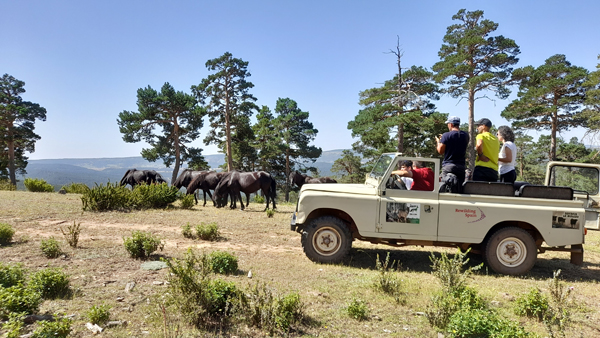
La Maleza Safari Tours in the Iberian Highlands, Tourists in Jeep. Credit: Lidia Valverde / Rewilding Spain.
This can create or sustain jobs in remote parts of Europe where the loss of even one family can cause a school or shop to close, impacting the wellbeing of many others.
Rewilding can also generate new financial flows to areas with low populations in the form of carbon or biodiversity credits. This can be an important economic incentive for local people who support rewilding on land that was previously farmed.

