

Terrestrial rewilding
Introduction
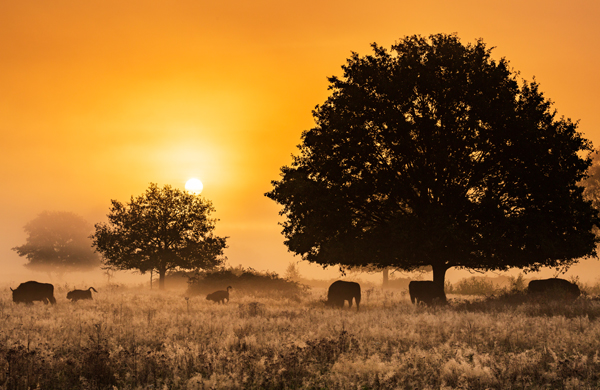
Bison in De Maashorst, The Netherlands. Credit: Hans Koster.
In recent decades Europe has witnessed a notable expansion in wooded areas and grassland, primarily due to the abandonment of agricultural land. This trend is largely driven by economic shifts, rural depopulation and changes in agricultural policies which have made farming less viable in certain regions, particularly in remote and mountainous areas.
As agricultural landscapes are abandoned, natural processes of succession take over leading to gradual natural regeneration. This natural reforestation can have ecological benefits, including increased biodiversity, improved soil health and enhanced carbon sequestration. The return of grasslands and wooded areas provides new habitats for a variety of plant and animal species, enhancing the overall ecological richness of the landscape.
One of the most exciting opportunities presented by this expansion in wooded areas and grassland is the potential for rewilding. Newly abandoned areas in Europe offer prime conditions for rewilding initiatives to support the recovery of wild nature.
 Learning outcomes
After completing this module, you should be able to:
- Determine what rewilding principles are most relevant and suitable to rewilding terrestrial landscapes.
- Explain the ecological, social, climatic and economic importance of forests and grasslands ecosystems.
- Assess the impacts of key threats to terrestrial ecosystems and how they disrupt natural processes.
- Compare the differences and similarities between rewilding in grasslands and in wooded areas, and their connections to each other and the wider landscape.
- Evaluate the role of keystone species and natural processes in maintaining healthy terrestrial ecosystems.
- Analyse case studies of rewilding forests and grasslands in Europe.
- Articulate the challenges and opportunities associated with wildlife comeback and select appropriate locally led positive coexistence measures.

