

What is rewilding and why is it important?
4 The legal and policy context of rewilding
4.1 Global commitments
At a global level, the need for ecological restoration is enshrined in the Kunming-Montreal Global Biodiversity Framework and in the United Nations' Sustainable Development Goals.
The Kunming-Montreal Global Biodiversity Framework (GBF) was adopted in 2022. It includes what is known as the ‘30 by 30’ target: a global initiative for governments to designate 30% of the world's land and seas as protected areas (or other effective area-based conservation measures) by the year 2030. Most countries in the world, and also organisations such as the European Union, have committed to achieving these targets.
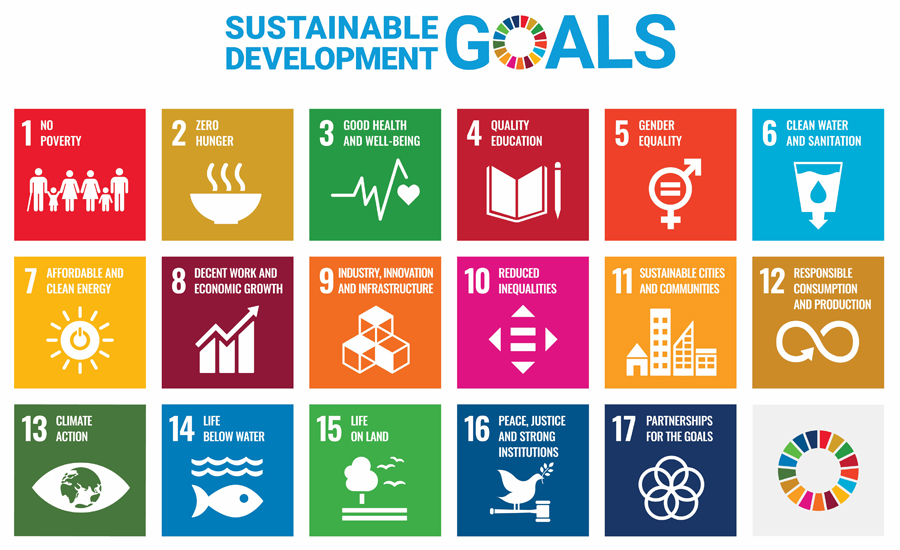
The Sustainable Development Goals (SDGs) are a set of 17 global goals established by the United Nations in 2015 as part of the 2030 Agenda for Sustainable Development.
The Sustainable Development Goals (SDGs) include nature restoration. SDG 15 focuses on life on land, with the mission to ‘protect, restore and promote sustainable use of terrestrial ecosystems, sustainably manage forests, combat desertification, and halt and reverse land degradation and halt biodiversity loss’ (United Nations Department of Economic and Social Affairs, n.d.b).
SDG 14 is also about nature, focusing on life below water. The mission here is to ‘conserve and sustainably use the oceans, seas and marine resources for sustainable development’ (United Nations Department of Economic and Social Affairs, n.d.a). Although SDG 14 does not explicitly refer to reversing ecological degradation or nature restoration, sustainable use and protection of marine and coastal environments enables spill over from protected areas into the wider waters with the resulting benefits for nature. You will learn more about rewilding in a marine context in Module 7.
The Intergovernmental Platform for Biodiversity and Ecosystem Services (IPBES) released in 2024 the IPBES Nexus Assessment, which examines the complex and interconnected relationships between biodiversity, water, food, health, and climate change. It analyses how these ‘nexus’ elements interact and influence each other, considering the impacts of human activities and exploring potential pathways towards more sustainable development (McElwee et al., 2024).
The assessment aims to provide policymakers and other stakeholders with a comprehensive understanding of these interlinkages to inform integrated decision-making and promote actions that simultaneously address multiple societal challenges.
Cover of the IPBES Nexus Assessment. Credit: IPBES.

