

What is rewilding and why is it important?
View
5 Climate change context
5.1 Rewilding as a nature-based climate change solution
Nature is our best ally in helping to fix climate change. Both animals and the habitats where they live play fundamental and interconnected roles in this cycle.
This means that both are important when it comes to rewilding as a nature-based climate solution.
- Restoring carbon-rich natural ecosystems – such as wild forests, grasslands, seagrass beds, and peatlands – enables them to absorb and store great quantities of carbon.
- Restoring populations of marine, freshwater, and terrestrial animals – particularly large vertebrate species – can also help to massively boost carbon capture and storage.
By restoring natural processes and enabling nature to manage itself, rewilding offers a climate change solution that is often cheaper and more effective than more active restoration approaches, such as planting huge quantities of trees.
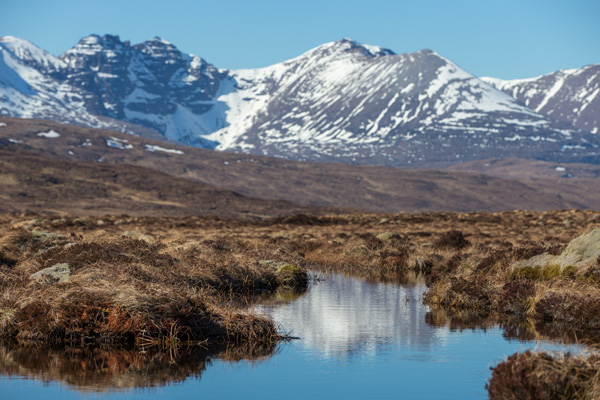
Peatland in the Scottish Highlands. Credit: Daniel Allen / Rewilding Europe.
Rewilding principle

By providing and enhancing nature-based solutions, rewilding can help to mitigate environmental, social, economic and climatological challenges.

