

Nature recovery
View
2 Letting nature lead
2.1 Case study
When dead wood is left in rivers, it serves as a vital component of the ecosystem by providing resting and observation spots for birds and dragonflies, as well as egg-laying sites for insects, fish, snails, and dragonflies. It forms the base of complex food webs that include myriad wildlife species, such as diatoms, insect larvae, fish, ospreys, herons, and otters.
Bryozoans (simple aquatic invertebrates), sponges, and caddisflies attached to the wood enhance water quality. Deadwood offers numerous hiding places for young fish and helps to create variation in the river bed.
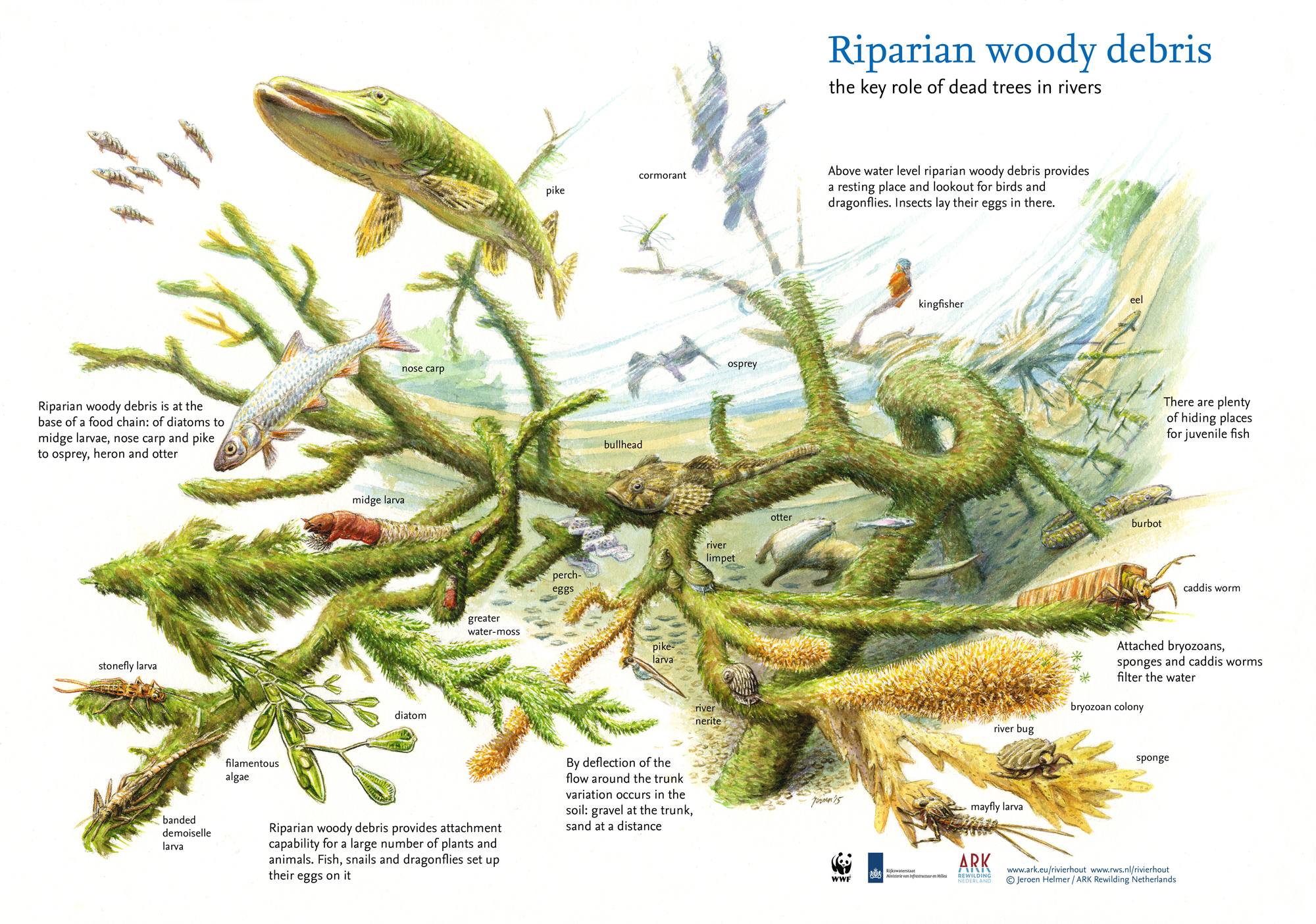
The key role of dead trees in rivers. Credit: Jeroen Helmer / ARK Rewilding Netherlands.

