

Nature recovery
3 Give nature a helping hand – bringing back wildlife
To kick-start and speed up the nature recovery process, we often need to give nature a helping hand, particularly at the start of rewilding initiatives. This can go beyond addressing the presence or absence of barriers. If an ecosystem and its wildlife populations are too degraded, simply letting nature lead may not be enough to restore functionality, or it will take too long for the restoration process to have a meaningful impact.
This is particularly true when it comes to wildlife. Poor connectivity and large distances between existing populations frequently make it impossible for animals to recolonise areas on their own. Beavers in the UK would never have been able to return without reintroductions. In these situations, rewilding efforts can help to kick-start nature recovery by translocating absent animal species, if the conditions for those species to return are favourable.
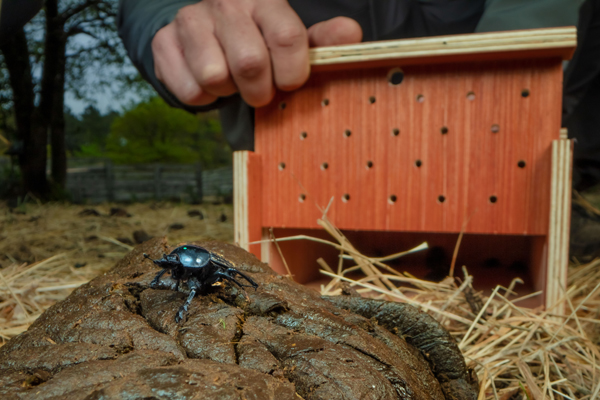
Dung beetle on cattle dung having been released at l'Étang de Cousseau (Cousseau dunes and wetlands). Credit: Neil Aldridge / Rewilding Europe.
You learned in Module 1 that rewilding focuses on the ecological role of animals and the natural processes that they enhance, rather than their conservation status.

Rewilding is concerned with what an animal does, not necessarily what it is. Often these two are the same, because when an animal is endangered and missing from many places, its functional role in the ecosystem will also be missing from those places.
But there is a difference.

