

The economic opportunity of rewilding
4 Paying for the benefits of wilder nature
4.1 Ecosystem services and the ‘user pays’ principle
Ecosystem services are nature’s contributions to people.
Click on each icon below to discover how they are usually arranged into four categories:
Some of these services are provided locally, such as recreation or clean water, while others are global in their effect, such as carbon sequestration that helps to control the climate. Some are regularly paid for, such as recreation opportunities.
Others are now becoming paid for more systematically, such as carbon uptake and storage, while others are rarely paid for directly, such as nature’s role in moderating the effect of extreme events.
As you have learned already, rewilding aims to boost natural processes and restore ecosystem functioning, which means that rewilding also maintains or increases the ecosystem services provided to people.
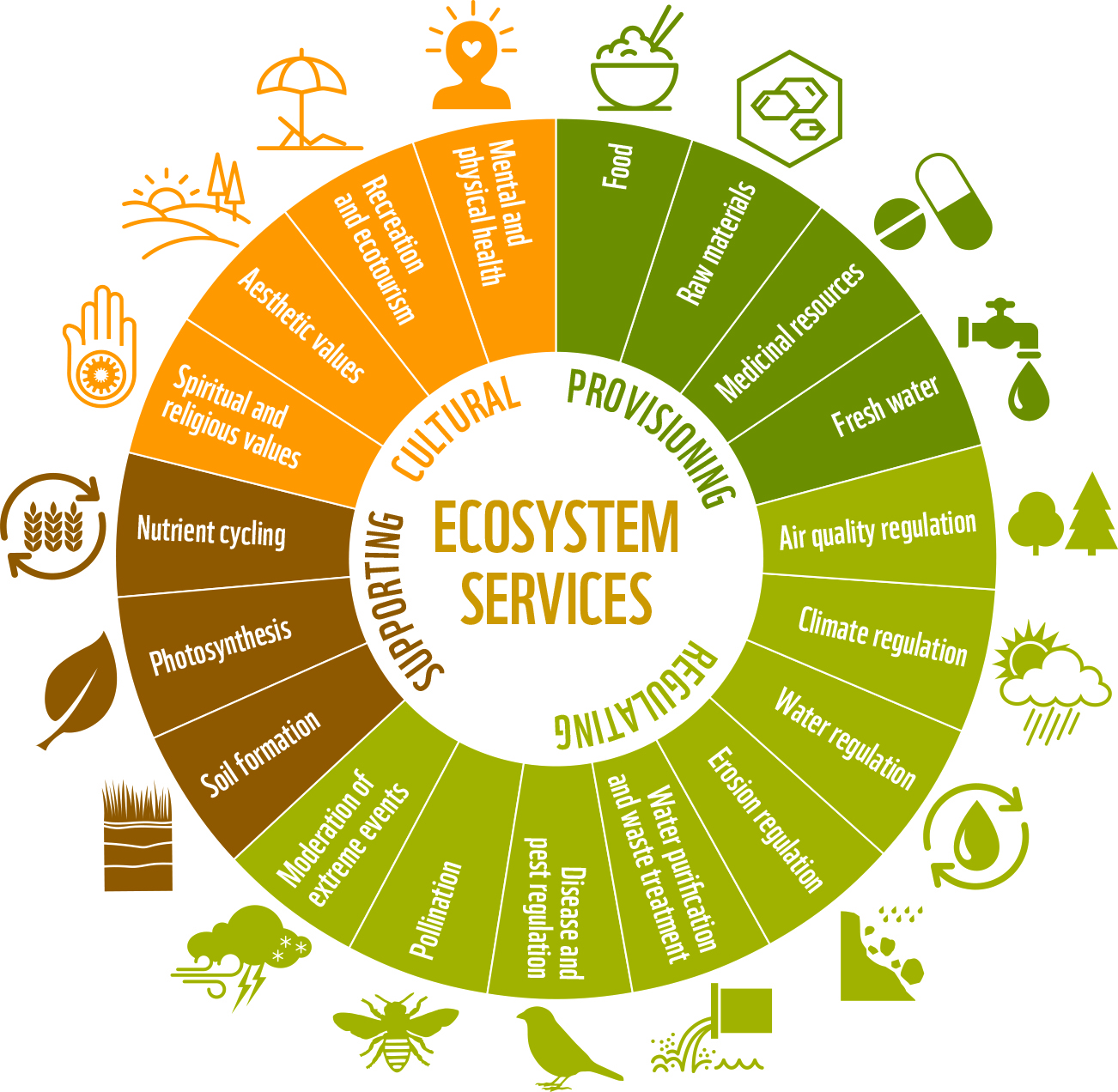
A visual representation of 19 ecosystem services, divided into 4 categories – Cultural, Provisioning, Regulating and Supporting.

