

The economic opportunity of rewilding
4 Paying for the benefits of wilder nature
4.3 Credits
The Bike Park Wales case study shows how people who are directly using nature pay for the benefits of it. The benefits for wild nature go further than the initial rewilding landscape and in some cases these benefits can be global.
Carbon sequestration is one of the natural processes that rewilding can help to recover. When carbon is locked away within nature it helps to mitigate our changing climate which affects everyone in the world, but how do we ask users to pay for these benefits when the benefits are experienced globally?
Credits are a way to monetise ecosystem services so that they can be more easily bought and sold. They are particularly useful for regulating and supporting services such as carbon sequestration and biodiversity and water regulation, which benefit people over large areas and even globally.
Carbon
The Paris Climate Agreement (2016) reinforces the need for developed countries, including those in Europe, to reach climate neutrality by 2050 by setting ambitions to reduce, mitigate and adapt to climate change and improve these ambitions every five years (UNFCCC, n.d.b). These goals are called Nationally Determined Contributions (NDCs).
Companies can also choose to take steps to reduce and mitigate their carbon emissions which are called voluntary commitments.
One of the ways that countries and companies can achieve their goals is by providing finance for carbon that is taken up or not emitted (UNFCCC, n.d.a).
Click on each of the labels below to see how the process works.
Rewilding and carbon credits
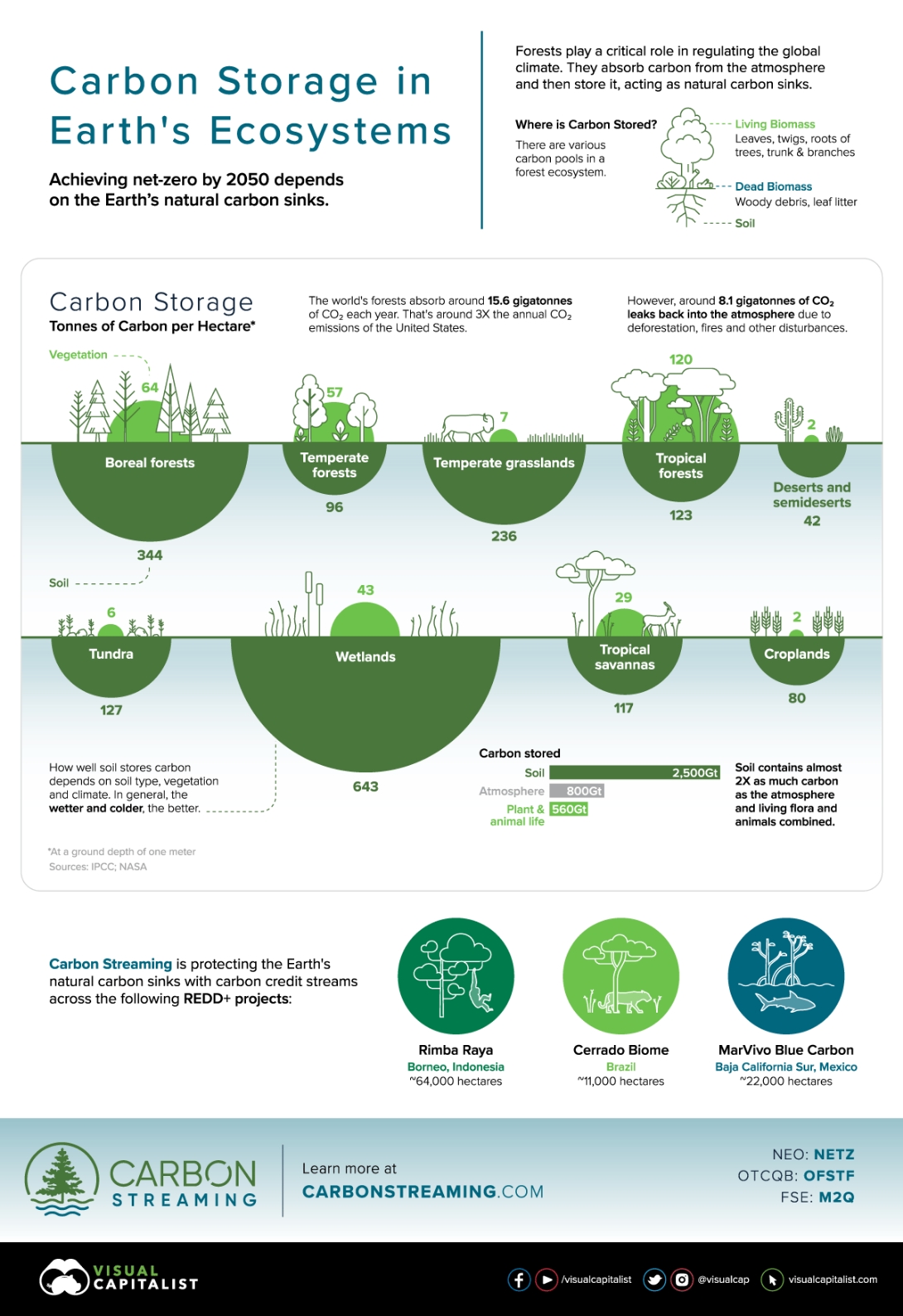
Different habitats can store different amounts of carbon in different ways, as the characteristics of each habitat differ in terms of vegetation development, climate, soil, water, and nutrient availability.
In general, well-functioning habitats can sequester and store large amounts of carbon. This is why rewilding is an important tool to tackle climate change.
Carbon markets are still evolving and carbon credits could become an important new source of long-term funding for rewilding as they reward the natural regeneration of the ecosystem, and help pay for its long-term protection.

