

Terrestrial rewilding
8 Coexistence
8.1 Wildlife comeback in Europe – enabling coexistence
After centuries where the eradication of wild animals was both accepted and, in many cases, encouraged, the populations of some European wildlife species have grown both in size and geographical range over the last 40 to 50 years.
Today, mammals such as the Eurasian beaver, grey seal, and European bison are making a strong comeback, while bird species such as the barnacle goose, griffon vulture, great white egret, and Dalmatian pelican are also recovering well.
Reasons for upward population trends include legal protection through the EU Birds and Habitats Directives, changes in policy and land use, as well as species management and conservation efforts, including rewilding.
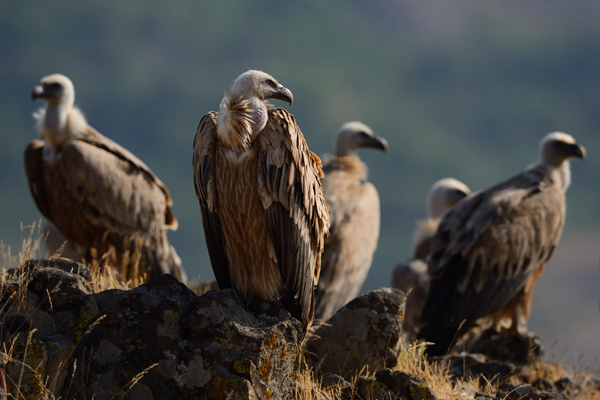
Griffon vulture, Gyps fulvus, Madzharovo, Eastern Rhodope mountains, Bulgaria. Credit: Staffan Widstrand / Rewilding Europe.
As populations of some European wildlife species recover, people are learning to live alongside them again. In some cases, this has led to challenges around coexistence, particularly in places where wildlife recovery has an impact on land use.
This includes, for example, beavers flooding land, livestock being predated by large carnivores, and the spread of diseases such as African swine fever. Fostering a growing acceptance and appreciation of wildlife is essential to any coexistence approach.
As you learned in Module 2, most human–wildlife coexistence issues are underpinned by different human perspectives on how and whether humans should share space and resources with wildlife again, the relative risks of wildlife to different interest groups, and the cultural values that different species reinforce or challenge.
Because there are multiple ways people see wilder nature, there must be different ways to help people live harmoniously with wildlife.

Physical efforts to prevent coexistence issues
Historically, efforts to promote human-wildlife coexistence have focused on using physical infrastructure to keep wildlife and human assets apart.
Click on each icon below to see some of the common methods that are used.
Working together
These physical measures on their own are often not enough to enhance coexistence to a necessary level. Living with wildlife is an emotional issue, it is not only a practical and financial one. Once damage caused by wildlife has taken place, the negative emotions this evokes are already in effect – compensation may be too slow or not enough to lessen these feelings.
Demonstrating the tangible benefits of wildlife comeback, and connecting people with wildlife in a positive, long-lasting way, have therefore become increasingly important, particularly in communities impacted by wildlife comeback.
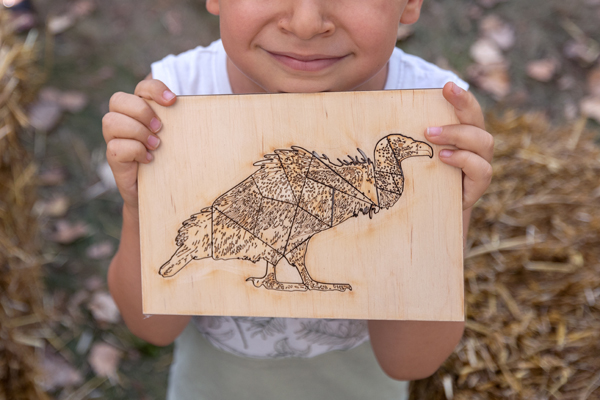
International vulture awareness day 2023, Madzharovo, Bulgaria. Credit: Ivo Danchev / Rewilding Rhodopes.
Rewilding adopts a holistic approach to promoting coexistence with nature. This approach has a bottom-up focus, encouraging and enabling people to live alongside wild nature once again.
Physical measures to coexist with wilder nature are used in combination with:
- Building engagement, through positive communications, education, and inspiration, as you learned in Module 3.
- Developing nature-based economic activities in order to increase the economic value of wildlife for communities and therefore encourage acceptance, which you learned about in Module 4.

