

Freshwater rewilding
1 Rivers
1.4 Case study: giving the Waal River room in the Netherlands
The narrow watershed of the Waal River used to create a bottleneck in the Dutch city of Nijmegen, which has long been prone to flooding. Severe flooding in 1993 and 1995 in the Netherlands led to a change in the way rivers and flood risk were managed across the country.
Whereas previous policy was based on enhancing flood protection through the construction of higher dykes, new policy supported the creation of more space for rivers - by reconnecting floodplains, recovering former side channels, and moving dykes further from river channels. This national programme was named "Room for the River".
In Nijmegen, the city chose to embrace this new approach and make space for the Waal. By restoring the riverscape to a more natural condition, the aim was to help manage water flow in a better way, and thereby prevent flooding to nearby homes and businesses. In 2012, efforts were begun to remove infrastructure and houses. The river's main dyke was moved 350 metres back from the edge of the water, while an extensive new river channel was dug parallel to the existing one. To cross this new channel, the Waal Bridge was extended and three new bridges were constructed.
Costs and benefits
While the cost of the work on the Waal exceeded 350 million euros, there were four main benefits:
Click on each of the icons below to explore each benefit.
All information in this case study is from Climate ADAPT (2016).
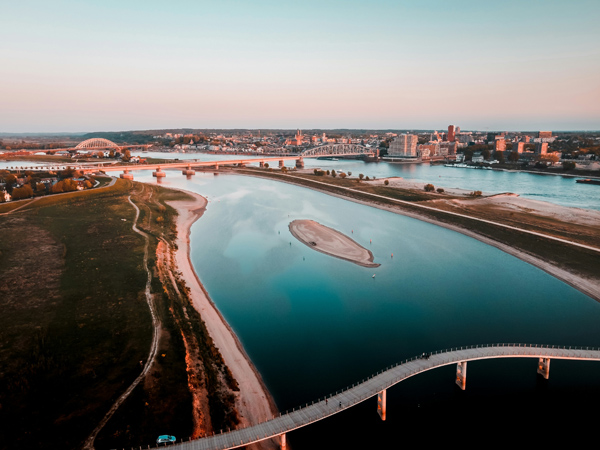
The Waal River in Nijmegen was transformed through the 'Room for the River' programme, reducing flood levels by 35 cm and creating a new nature reserve. Credit: Richard Brunsveld / Unsplash.


