1.6 Case study: breathing new life into the Danube Delta
Several years ago, the Rewilding Ukraine team and local partners kicked off long-term efforts to restore natural water flow and connectivity in the Danube Delta rewilding landscape, which is divided between Ukraine, Romania and Moldova.
Large-scale hydro-engineering work carried out in the Ukrainian part of the delta during the twentieth century – which primarily involved the creation of an extensive network of canals and dykes, and agricultural polders – had a hugely negative impact. Effects include:
leaving stagnating water bodies
altering sedimentation patterns
disconnecting floodplains
devastating populations of fish and other wildlife
diminishing the ability of the delta to recycle nutrients.
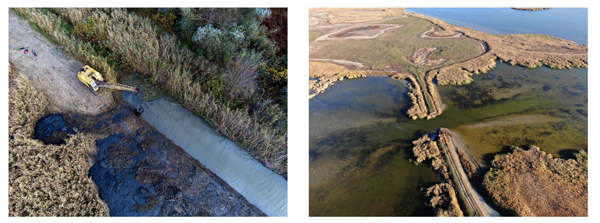
Cleaning of channels between the Danube River and Katlabuh Lake helps to restore water flow. Credit: Andrey Nekrasov [left]. Dam removal in the Ukrainian part of the Danube Delta in 2019. Credit: Maxim Yakovlev [right].
Activity: Dam removal
Allow 15 minutes
Watch a short film about dam removal by Rewilding Sweden on the Abramsån River (Rewilding Europe, 2023c).
In the video, the team moved and removed remains from the local cultural history in order to restore natural processes.
Questions: Do you think this was the right thing to do? Why?
What natural processes would be able to recover by removing the dam and placing the rocks back in the water?
From a rewilding perspective it is important to celebrate people’s culture and history on the land, however this can be done in ways that support nature’s recovery. Here, the removal of the dam allowed the water flow to become more natural, while retaining the stone structures allowed the historic use to remain visible.
Letting nature lead – By removing the dam, fish are now able to move more freely to nursery and feeding grounds. There is a more dynamic flow of water, with rapids and pools, caused by the rocks. This will allow for sedimentation and erosion, adding material and nutrients to the soil. The wood from the dam was also left in the river, contributing nutrients and habitat as it decomposes and enriches the soils.
Acting in context – By removing the dam but retaining the stone supports the rewilding work left the history and culture of the land visible.
Working together – Bringing together the skills of scientists, a film maker and someone able to operate heavy machinery. Beforehand, they will have worked with government officials and funders to secure permission and money to remove the dam.
Answer:
From a rewilding perspective it is important to celebrate people’s culture and history on the land, however this can be done in ways that support nature’s recovery. Here, the removal of the dam allowed the water flow to become more natural, while retaining the stone structures allowed the historic use to remain visible.
We noted the following rewilding principles:
Letting nature lead. By removing the dam, fish are now able to move more freely to nursery and feeding grounds. There is a more dynamic flow of water, with rapids and pools, caused by the rocks. This will allow for sedimentation and erosion, adding material and nutrients to the soil. The wood from the dam was also left in the river, contributing nutrients and habitat as it decomposes and enriches the soils.
Acting in context: by removing the dam but retaining the stone supports, the rewilding work left the history and culture of the land visible
Working together: bringing together the skills of scientists, a film maker and someone able to operate heavy machinery. Beforehand, they will have worked with government officials and funders to secure permission and money to remove the dam.