

Freshwater rewilding
View
2 Wetlands
2.4 Methods of wetland rewilding
Some of the most important methods of wetland rewilding include:
- Plugging drainage ditches:
- Description – Blocking drainage ditches (e.g. putting back soil) to restore natural water levels and hydrological processes.
- Example – In the Oder Delta, which you will read more about in the peatlands case study later in this module.
- Impact – Improved water retention, restored wetland habitats, and increased wilder nature, including wild species.
- Reintroducing keystone species:
- Description – Reintroducing species that play a critical role in maintaining ecosystem health.
- Example – The reintroduction of beavers in various European wetlands, which create ponds, slow water flow, and increase habitat complexity.
- Impact – Enhanced biodiversity, improved water quality, and natural flood management.
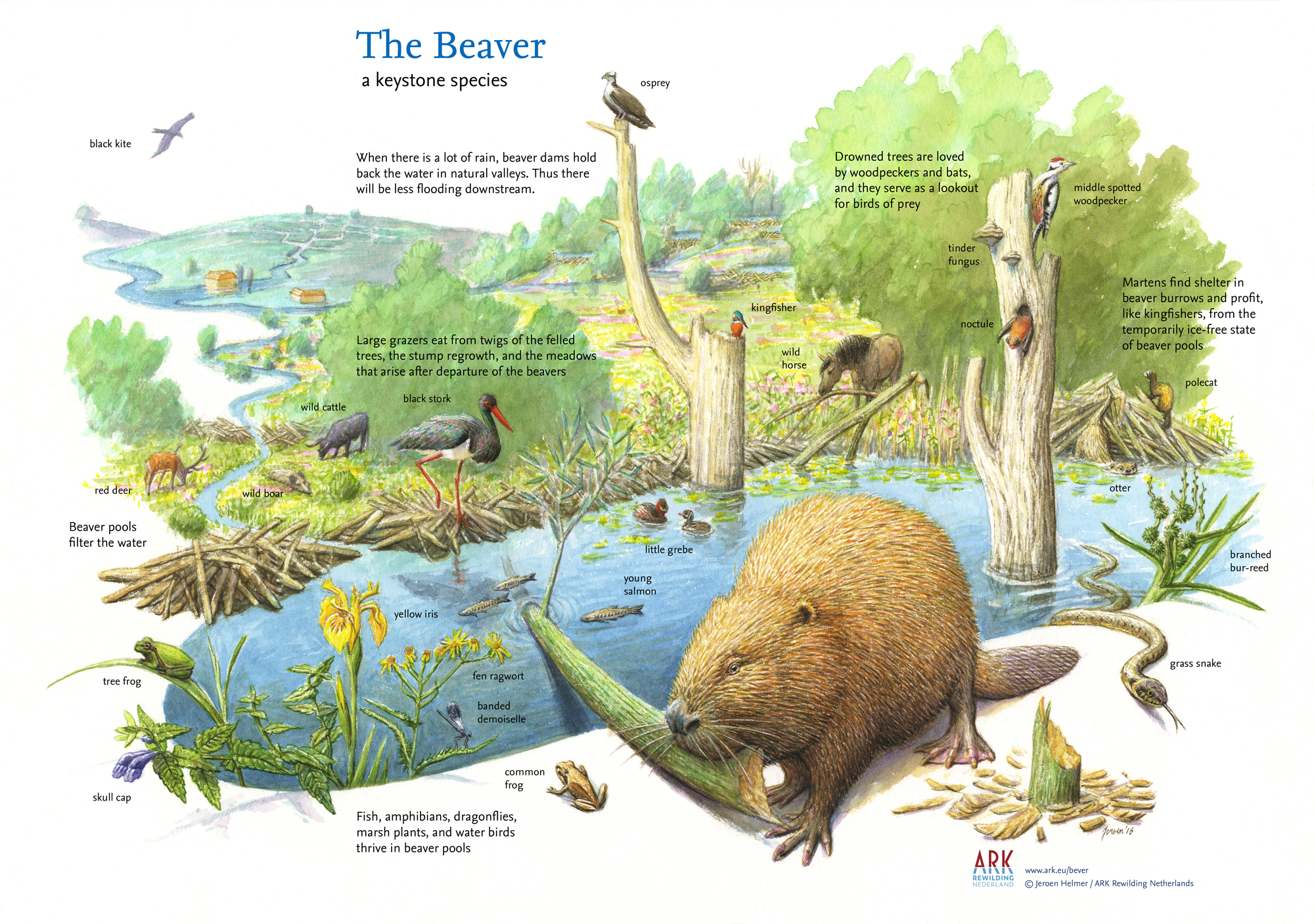
The beaver: A keystone species. Credit: Jeroen Helmer / ARK Rewilding Netherlands.

