Freshwater rewilding
2 Wetlands
2.5 Case study: The Danube Delta
In 2023, 20 fallow deer and 20 red deer were released on Bilgorodskiy Island in the Ukrainian part of the Danube Delta by Rewilding Ukraine and the Danube Biosphere Reserve.
Deer have an important role in:
- disbursing seeds across the landscape
- consuming vegetation that could otherwise dominate the wetlands
- attracting predators to the area, helping to restore natural predator–prey interactions.
|

Situated in Ukraine, Romania and Moldova, the Danube Delta is Europe’s largest remaining natural wetland, extending across more than 650,000 hectares. Boasting the world's largest reedbeds, this unique ecosystem of unaltered rivers, lakes, marshes, steppes, dunes, lagoons, and old-growth forests is home to more than 60 species of fish, including four species of sturgeon, and mammals such as otters and the European mink.

The delta supports colonies of breeding birds totalling tens of thousands of individuals – notably terns, white pelicans and herons – and colonies of several globally threatened species are found here. Most of the world's global pygmy cormorant population is found in the delta, as is most of the Dalmatian pelican population in Europe.
Context and opportunity
Despite the transboundary Danube Delta being the largest and most natural delta in Europe, widespread development of infrastructure during the twentieth century led to a deterioration of natural flood dynamics and the filtering function of the area's reed marshes. It also caused salinisation and biodiversity loss.
Attempts to control natural river dynamics by constructing polders, dams and dikes have negatively impacted local residents, particularly fishing communities (with a 60% decrease in fish stocks).
Much of the infrastructure that has caused these impacts is now dilapidated and obsolete.
Rewilding progress
Supported by Rewilding Europe, Rewilding Ukraine and Rewilding Romania have taken vital steps forward and restored large parts of the delta by significantly improving the ecological integrity and ecosystem functioning of 40,000 hectares of wetland and terrestrial (steppe) habitat.
Key natural processes, particularly flooding and natural grazing, are being re-established as driving landscape-forming processes. Fostering these processes is encouraging wildlife comeback, enhancing biodiversity and underpinning the development of local nature-based economies.
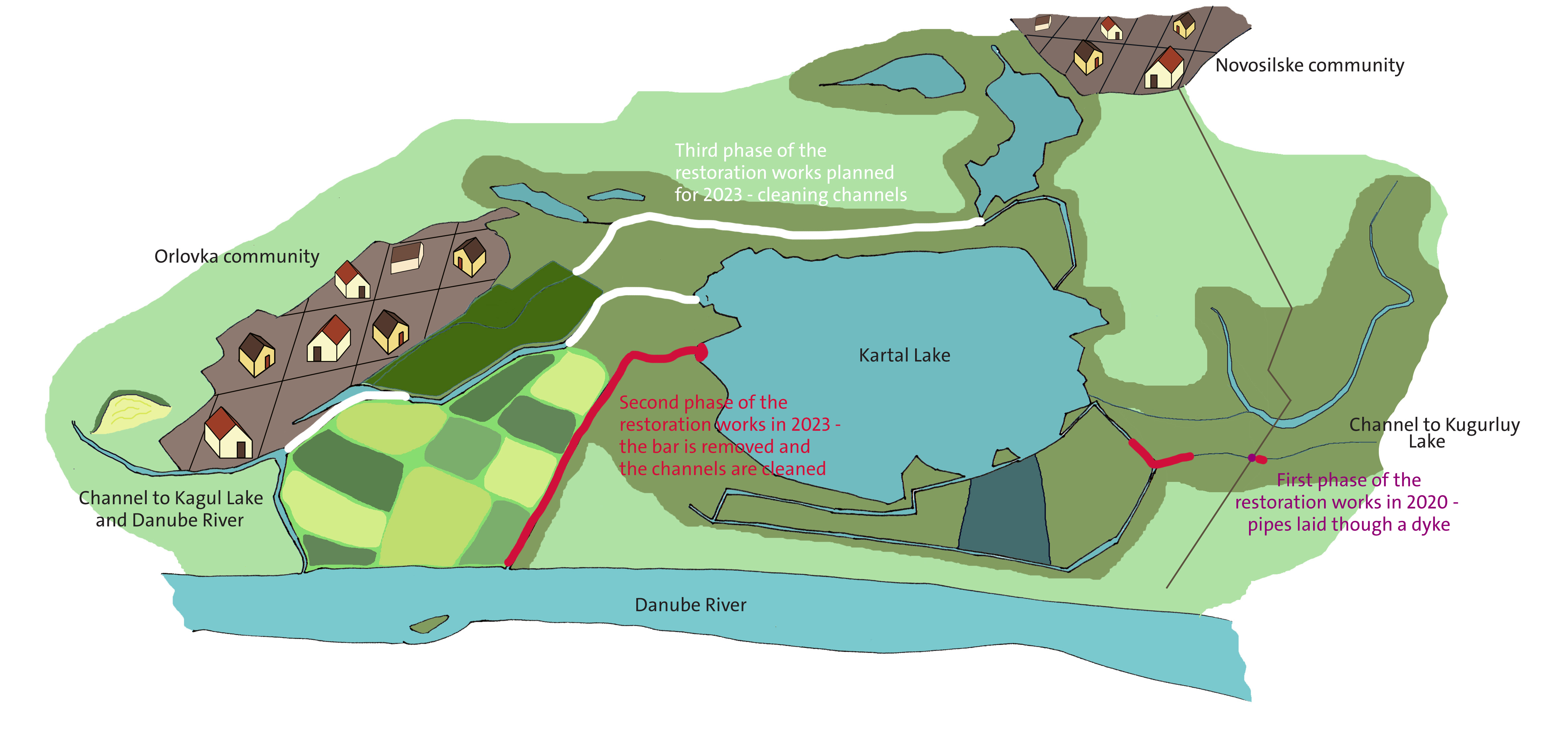
A map illustrating the restoration work currently being undertaken by Rewilding Ukraine and local partners.
The main rewilding interventions, mostly on the Ukrainian side, have so far been:
- Ten obsolete dams and obstacles have been removed on the Kogilnik, Kagach, and Sarata rivers to restore natural flow, spawning grounds and meadows.
- Ecological processes and natural hydrology have been restored on Ermakiv Island through the partial removal of dykes surrounding the island.
- Water quality has been improved, productive shallow wetlands restored and native fish species populations supported by improving the connectivity and water exchange between the Danube River and some large lakes, such as Katlabuh and Kartal.
- Over the last five years, dynamic natural processes in the delta have been revived by restoring natural grazing, with over 200 large herbivores released, including the red and fallow deer you saw in the film earlier. Others include water buffalo, konik and hucul horses and kulan.
- The growth of nature-based tourism has been supported through the construction of a wildlife hide and observation tower on Ermakiv Island, as well as information panels and other infrastructure on the Tarutino Steppe.
- Eco-ethno festivals held near Beleu Lake in the Republic of Moldova and in the Tarutino steppe in Ukraine have engaged local communities, reviving a sense of pride in their nature and culture.
- An education campaign has been launched in all three countries of the Danube Delta.
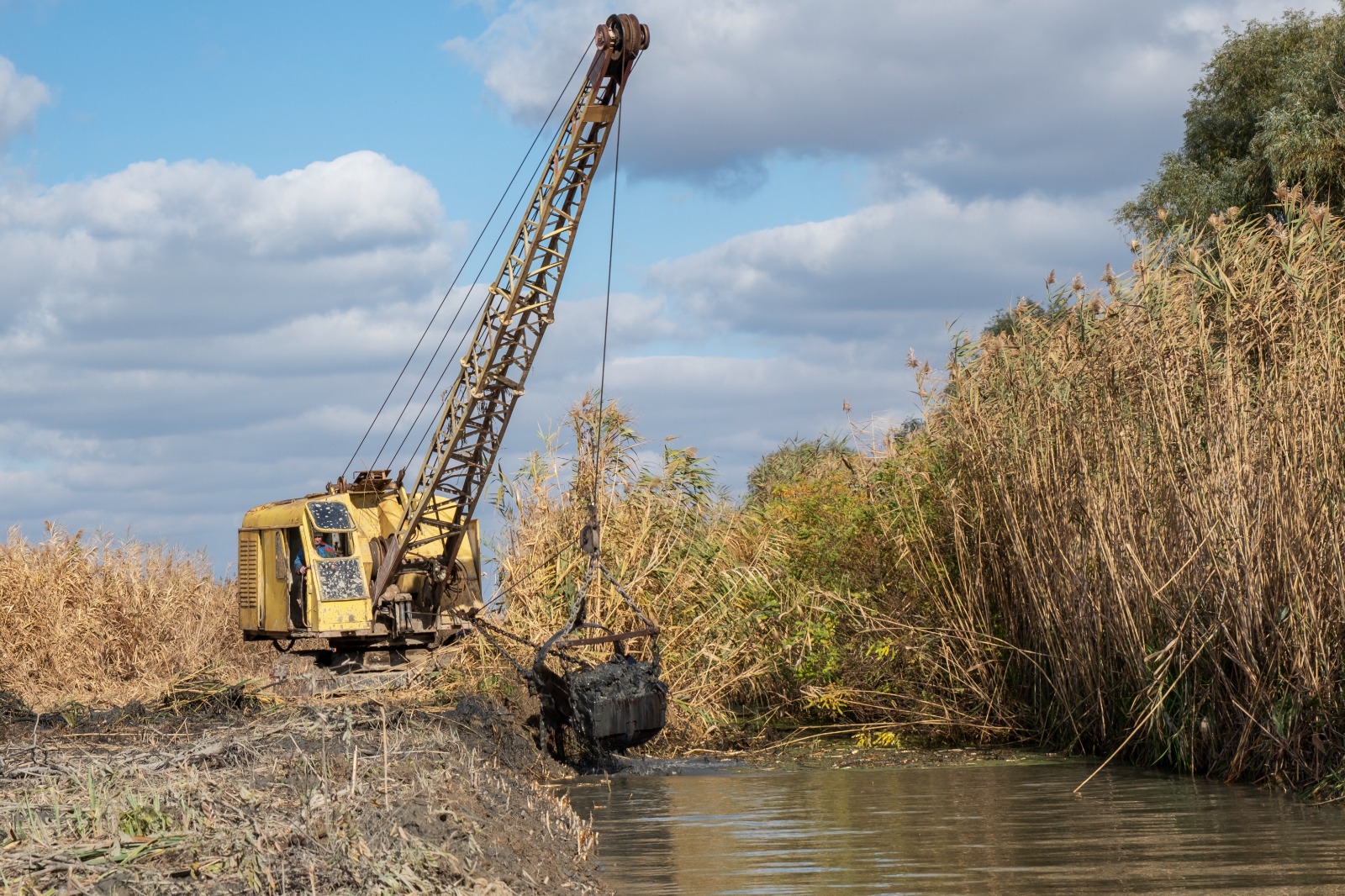
Cleaning of the channels between Danube river and Katlabuh lake. Credit: Andrey Nekrasov.
Helping pelican populations recover
The vulnerable Dalmatian pelican requires undisturbed, fish-filled waters with extensive flooded and shallow areas. Between the 1950s and 1980s, the construction of dykes and agricultural polders reduced suitable habitat for the birds and impacted heavily on local communities.
From late 2019 the Rewilding Ukraine team started to construct artificial nesting platforms to encourage the breeding of Dalmatian pelicans. At present these iconic birds lack safe and suitable locations in the delta to breed – this temporary measure will hopefully create suitable conditions for pelican reproduction, despite difficulties in monitoring due to the ongoing war.
With wetland rewilding efforts restoring natural processes and habitats in the delta the team is optimistic that new natural breeding sites will develop.
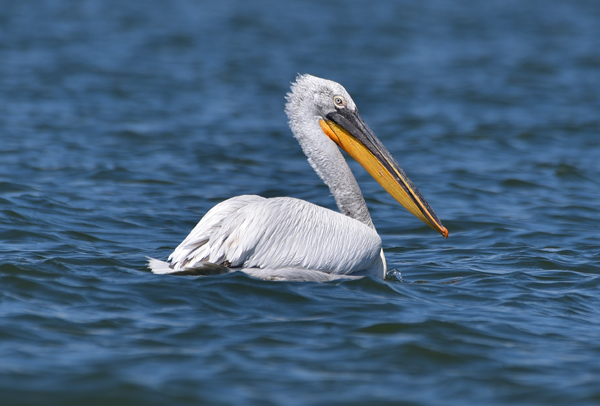
Restoring natural water flow in the Ukrainian part of the Danube Delta will support the comeback of the Dalmatian pelican, one of this important wetland’s most iconic indicator species. Credit: Maxim Yakovlev / Rewilding Europe.