

Freshwater rewilding
3 Peatlands: an essential type of wetland
3.3 Case study: rewilding the Oder Delta
The Oder Delta is a giant interconnected mosaic of rivers, lakes, wetlands, heathlands and riparian forests on the border between Germany and Poland. As tributaries of the Oder River, many smaller rivers and streams here are in poor ecological condition.
Riverbeds have been artificially straightened, deepened and embanked in many places, the free flow of water has been restricted by dams and weirs, and the areas surrounding rivers drained and reclaimed for agriculture and forestry.
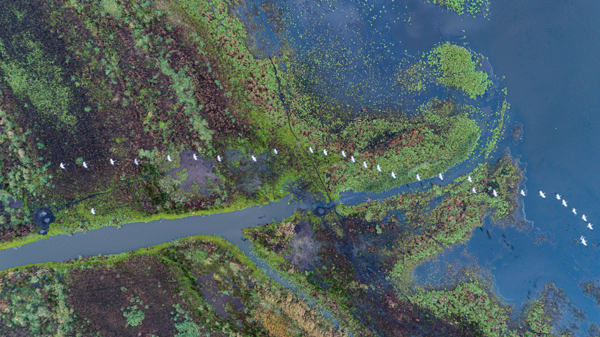
Aerial view of European cranes flying over the marshland of Anklamer Stadtbruch, Rewilding Europe Oder Delta, Mecklenburg-Vorpommern, Mecklenburg-Western Pomerania, Germany. Credit: Florian Möllers / Rewilding Europe.
The Rewilding Oder Delta (2025) team are working to restore local waterways through a range of measures. These include:
- rewetting wetlands near rivers to increase water storage
- removing barriers to increase habitat connectivity
- supporting riverine species by restoring spawning grounds, which typically involves adding stone and gravel in locations where it should occur naturally.
The overall goals are to:
- Restore natural water flow.
- Enhance biodiversity.
- Increase connectivity.
- Restore fish migration.
- Boost the overall health, functionality, and resilience of the natural landscape.
In addition, the return of keystone wildlife species supports the development of local nature-based economies.
Click on each thumbnail below to enlarge the image.

