

Marine rewilding
1 Threats to marine environments
1.4 Acidification
The ever-increasing level of carbon dioxide in the atmosphere means the ocean is now absorbing more carbon than ever before.
This changes the chemistry of marine water and results in it becoming more acidic. Ocean acidification can create conditions that eat away at the minerals used by oysters, clams, lobsters, shrimp, coral reefs, and other marine life to build their shells and skeletons. Human health is also a concern.
Marine life plays a crucial role in tackling climate change as summarised in Animating the Carbon Cycle, which shows the role wildlife plays in carbon uptake.
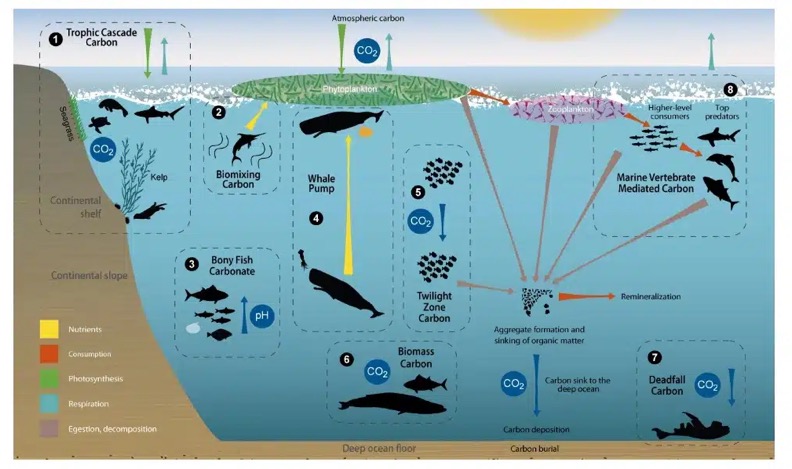
Example of Animating the Carbon Cycle in marine coastal and deep ocean ecosystems. Credit: Yale/GRA.
Click here for an enlarged version of the above image.
Whales contribute significantly by diving deep and bringing nutrients to the surface, which supports the growth of phytoplankton. These microscopic plants absorb large amounts of carbon dioxide during photosynthesis which helps to reduce greenhouse gases in the atmosphere (Global Rewilding Alliance, 2024).
Marine rewilding efforts enhance these natural processes and by m aintaining healthy ecosystems, we can ensure that marine life continues to sequester carbon effectively and mitigate the impacts of climate change.

