

Marine rewilding
2 Towards healthier marine ecosystems
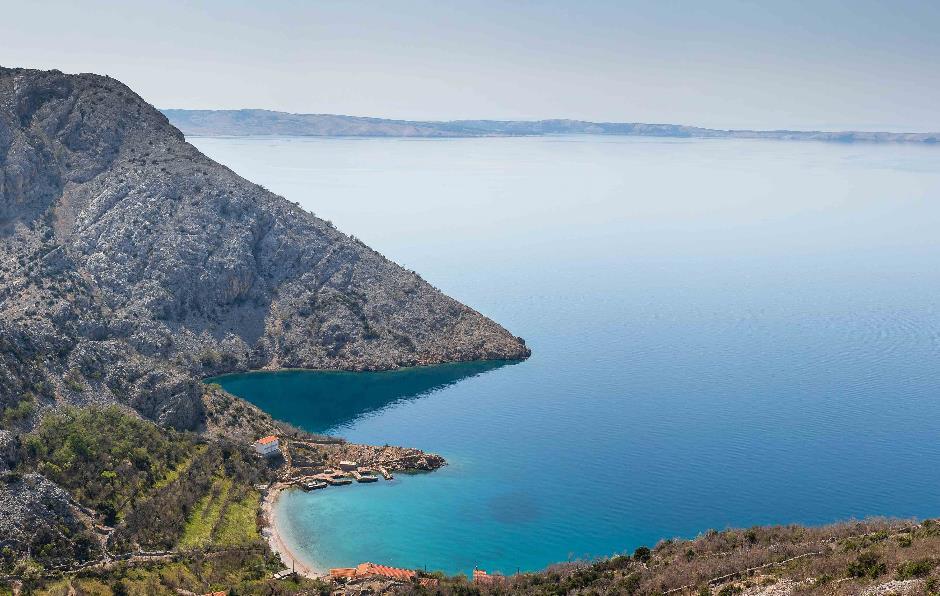
Coastal Waters in Croatia. Credit: Nino Salkic.
Just as in terrestrial rewilding, marine rewilding is about restoring natural processes. These processes can then revitalise ecosystems to the point where they can sustain themselves independently.
The same types of natural processes occur in the marine environment as on land.
Click on each icon to view some examples.
One of the key processes is the natural flow of water and sediments. In estuaries and deltas the movement of freshwater from rivers into the sea carries essential nutrients and sediments that support diverse habitats. Human interventions like damming and channelisation disrupt these flows (see Module 6), leading to habitat degradation which impacts the marine environment.
Another crucial process is the role of keystone species in maintaining ecosystem health. For example, in coastal areas, species like oysters and mangroves play significant roles in water filtration, sediment stabilisation and providing habitat for other organisms. Oysters filter large volumes of water, removing pollutants and improving water quality, while mangroves, seagrasses, and salt marsh plants protect shorelines from erosion and provide breeding grounds for fish.
Reintroducing and protecting these species can help restore the natural processes they support, leading to healthier and more resilient ecosystems.
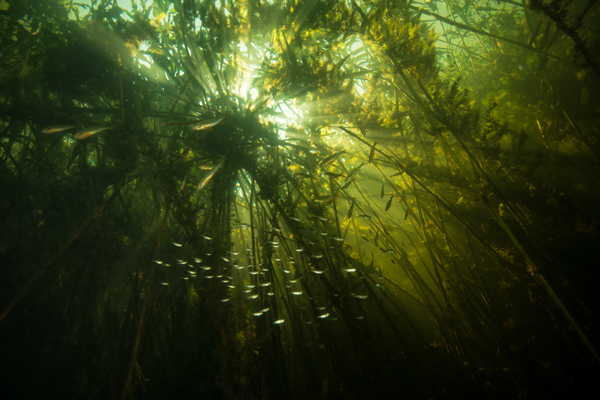
Schools of multiple fish species seek protection in the lush reedbed of Danube Delta, Romania. Credit: Magnus Lundgren / Rewilding Europe.
Additionally, the natural cycling of nutrients is essential for marine ecosystems. In the open ocean, processes like upwelling bring nutrient-rich waters from the deep sea to the surface, supporting plankton blooms that form the base of the marine food web. Coastal and estuarine areas benefit from nutrient cycling through the decomposition of organic matter by microorganisms which releases nutrients back into the ecosystem.
Rewilding efforts can enhance these processes by protecting and restoring habitats that facilitate nutrient cycling like seagrass beds and salt marshes.
By focusing on these key natural processes rewilding can help restore the health and functionality of marine ecosystems.

