Lesson 3.4: Intersectional Inequalities and Uneven Impacts
This lesson analyses how intersecting inequalities intensify vulnerability to ‘anti-gender’ mobilisation. Drawing on intersectionality as both an analytic category and a practical approach, we show how race, migration status, class/economic status, disability, and legal precarity shape exposure to violence and access to safety. It also highlights intersectional forms of resilience and care that arise in response to ‘anti-gender’ violence.
4. Reflection & exercise

Mapping lived experiences
and intersectional positioning
In this activity, you will use the ReliefMaps+ tool to reflect on how your experiences of comfort, safety, or unease vary across different everyday spaces, and how these experiences are shaped by intersecting aspects of your social position.
Rather than focusing on a single identity, this exercise invites you to think about how gender, sexuality, race, age, class, disability, migration status, or other factors interact with specific places in your daily life.
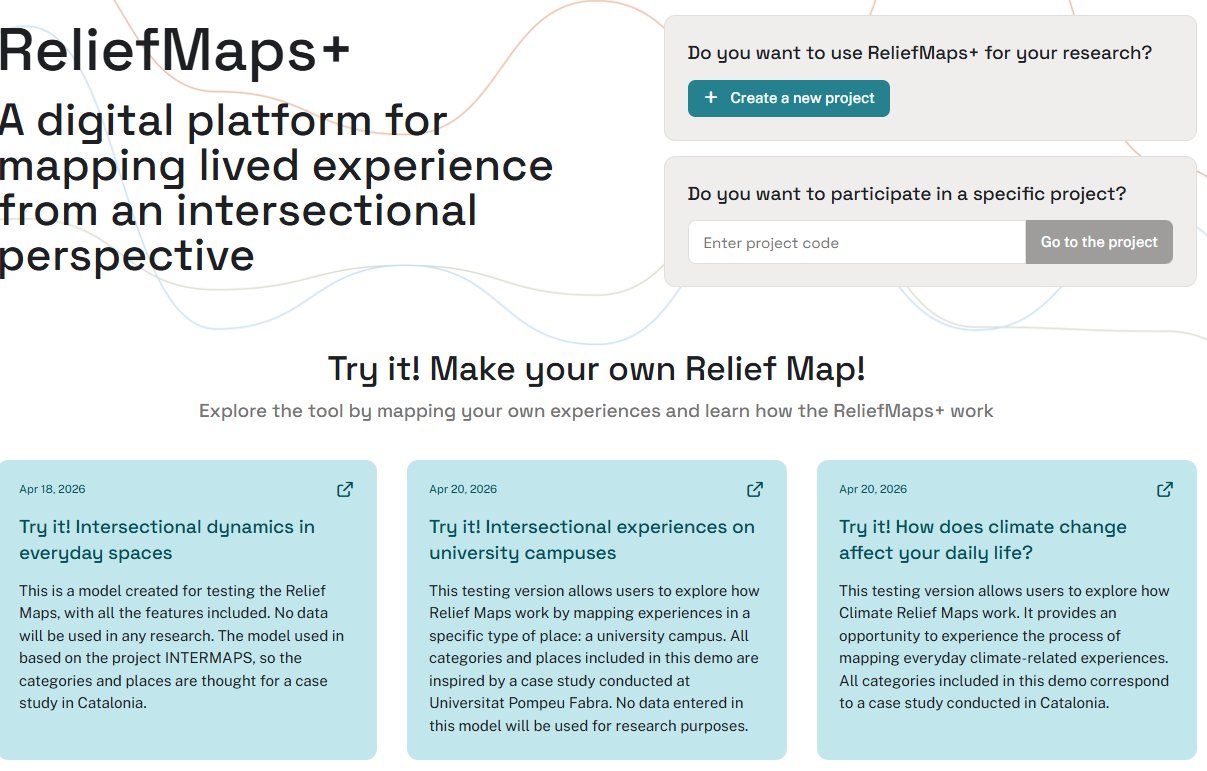
You will be asked to think about familiar places, such as:
- your home
- your workplace or place of study
- public spaces (streets, transport, institutions)
- leisure or community spaces
For each place, you can:
- indicate your level of comfort or discomfort by moving a point up or down
- select emotions that best describe how you feel in that space
- add written reflections if you wish
The tool allows you to consider multiple axes of inequality at once, helping to visualise how experiences shift depending on context.
Purpose of the exercise
The goal is not to produce data or correct answers, but to support reflection on:
- how everyday spaces are experienced differently by different people
- how power relations become visible (or invisible) in ordinary settings
- how media narratives, public debates, or political discourses may shape feelings of safety, belonging, or exclusion
This activity connects to the session’s focus on the lived and affective effects of ‘anti-gender’ politics, showing how abstract debates translate into embodied experiences.
Care and consent
Reflecting on difficult places or experiences may bring up uncomfortable emotions. Please remember:
- you can pause, stop, or leave the activity at any time
- you do not need to complete or submit anything
- no personal information is required
The information you enter will not be stored or used for research. If you do not click ‘Finish’, nothing will be saved.
Optional reflection questions
After completing the activity, you may want to reflect on the following:
- Which places felt most comfortable or uncomfortable — and why?