Module 5: Information Access
Introduction
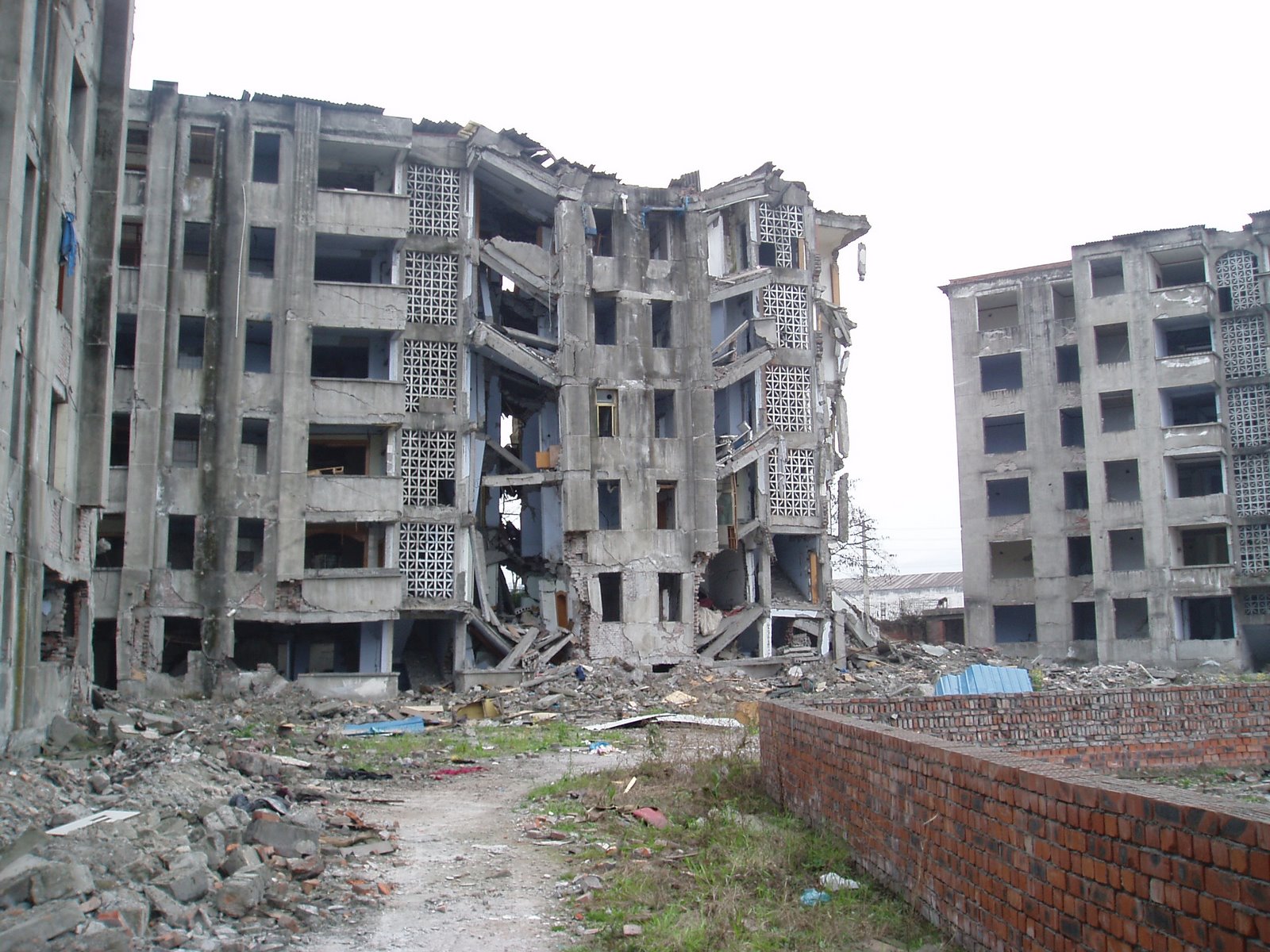 Earthquake damage in Dujiangyan (Image Credit: Solmaz Mohadjer, used with permission)
The image above shows earthquake damage in the city of Dujiangyan in China. On May 12, 2008, a magnitude 8 earthquake devastated a mountainous region in south-central China, resulting in nearly 70,000 deaths. The 2008 Sichuan earthquake (also known as the 2008 Wenchuan earthquake) destroyed more than 7000 school buildings and significantly damaged more than 10,000. The number of school children affected was estimated to be in the millions. While many schools were turned into rubbles, one withstood the earthquake shaking, allowing all of its 2,323 students together with their teachers emerge unharmed.
Ye Zhiping, the school principal of Sangzao Middle School was the main reason for this outcome. In his first year as the school principal, he learned that the quality of the school building was not up to standards, so he pushed hard for building renovation, little by little, over many years until the building was modified in accordance with the standard engineering requirements. He also carried out earthquake drills regularly at his school so when the 2008 earthquake happened, students and teachers knew exactly what to do.
As the above example shows, hazard information should reach those in need, be understood, and be acted on if it is to help reduce risk. Many at-risk communities, however, struggle to access useable hazard information. As demonstrated in previous modules, working in partnership, listening to stakeholders, and culturally contextualising research can help to create useful hazard information. Participatory approaches such as citizen science can further bridge the gap between knowledge generation and access.
Through this module we explore these themes, and what hazard researchers can do to ensure improved and equitable access to hazard information.
Click Next Page to continue.
For further information, take a look at our frequently asked questions which may give you the support you need.
If you have any concerns about anything on this site please get in contact with us here.