Module 7: Connect DRR and Sustainable Development
Policies and Strategies for Resilient Sustainable Development
 The ambitions of the UN Sustainable Development Goals are commonly embedded into national and regional development strategies, setting out priorities at a more localised scale.
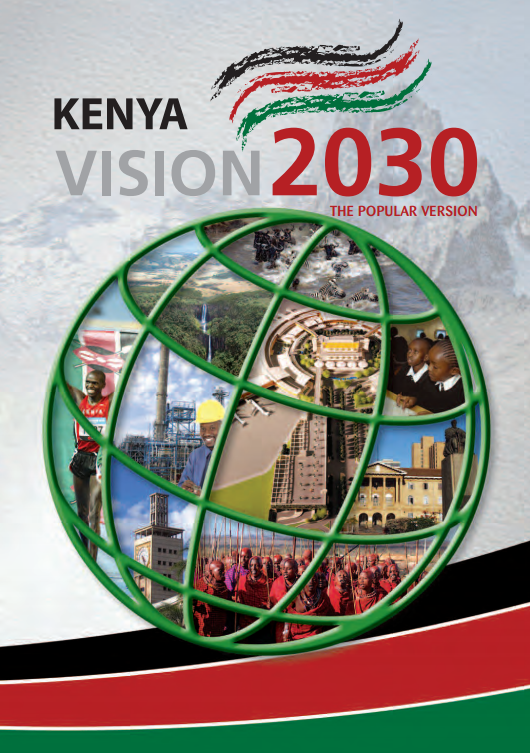
For example, Kenya’s Vision 2030 is a national strategy for development, with priorities of increased energy production, resilient urbanisation, better waste management, and improved use of groundwater. By being aware of and engaging with development strategies such as Kenya Vision 2030, natural hazard scientists can reflect on questions such as:
- How may development plans create new or exacerbate existing risks?
- What opportunities do development plans provide for risk reduction?
- What research questions may be of local/national priority?
Aligning research power with development ambitions expressed in such strategies can help to secure critical “pathways to impact” by ensuring coherence with existing policy objectives and the strengthening of relationships between natural hazard scientists and those involved in planning and delivering development activities.
Evidence suggests there is a need to connect natural hazards research to sustainable development in a more proactive and deliberate manner. Whilst we recognise that connections to sustainable development may be expressed in other types of output (i.e., not traditional research outputs), consider the following examples:
- Of the 1249 abstracts submitted to sessions coordinated by the Natural Hazards Division of the 2023 EGU General Assembly, only 14 (1.1%) referred to “sustainable development” in their title and/or abstract.
- Based on a Google Scholar search (conducted on 13 July 2019), of approximately 2550 articles published in the EGU journal Natural Hazards and Earth System Sciences between 2015 and 2023, 195 (7.6 %) make direct reference to “sustainable development”.
Explicitly joining the dots between sustainable development and natural hazards research can help to encourage risk-informed development.
Take a moment to consider the contexts in which you work. What development (sustainable or otherwise) strategies are you aware of, and what opportunities exist to connect your natural hazards work to these strategies?
Click Next Page to continue this course and complete an activity.
For further information, take a look at our frequently asked questions which may give you the support you need.
If you have any concerns about anything on this site please get in contact with us here.