
3.1 Microaggression in videoconferencing
The term ‘microaggressions’ was coined to identify every day and ‘normalised’, even if sometimes unintentional, expressions of racism – including verbal, behavioural or environmental indignities, slights and insults toward people of colour (Sue, Capodilupo and Torino, 2007).
It was later found that it could also be useful to identify:
Gender microaggressions as intentional or unintentional actions or behaviors that exclude, demean, insult, oppress, or otherwise express hostility or indifference toward women.
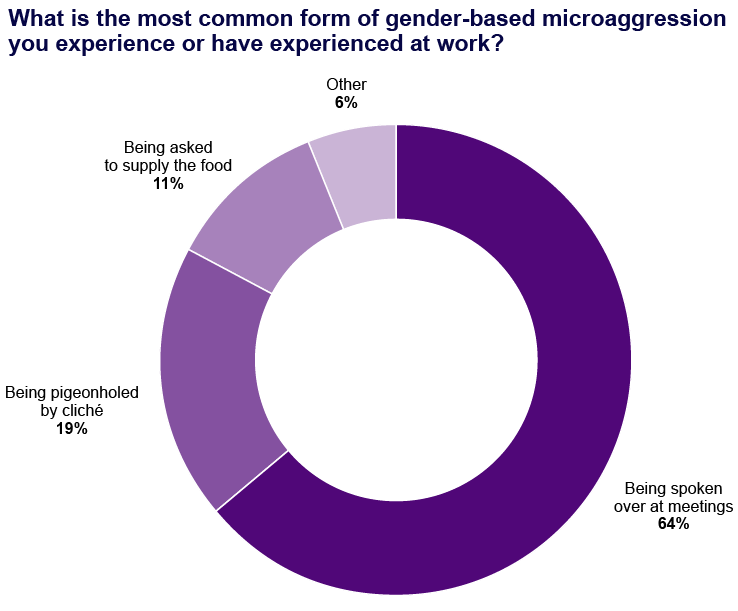
As the quote implies, this is a complex phenomenon that can take different forms as can be seen in this graph from the WomenTech Network (2025) – Figure 5.
In video conferencing spaces, this from of aggression can take on different forms, becoming more serious the more persistent or repeated they are over time. These include:
- Micro assault: for example, name-calling.
- Microinsults or ‘subtle snubs’.
- Microinvalidation of someone’s voice or knowledge.
- Abrupt interruption when someone is speaking.
- Patronising gendered communication like ‘mansplaining’ – this is a pejorative term used for when a man explains something, usually to a woman, in an overconfident, condescending manner, without regard to their expertise.
In Unit 1, Section 4, you were introduced to the Social Identity Wheel and the idea that different identities impact the ways you experience the world and how others might see and treat you. We all have many social identities that come together or intersect in ways that shape our experiences of privilege and discrimination. The idea that different social identities intersect is known as ‘intersectionality’. You will learn more about this idea in Unit 3.
How microaggressions are performed or experienced is shaped by different, intersecting social identities (e.g. gender, race, sexuality and so on). It is important to highlight that some people, namely those from minoritised groups, are not only targeted more often but are less likely to be given social support from their peers and are met with more negative consequences after enduring this type of assault (Biglia and Toledo, 2020).
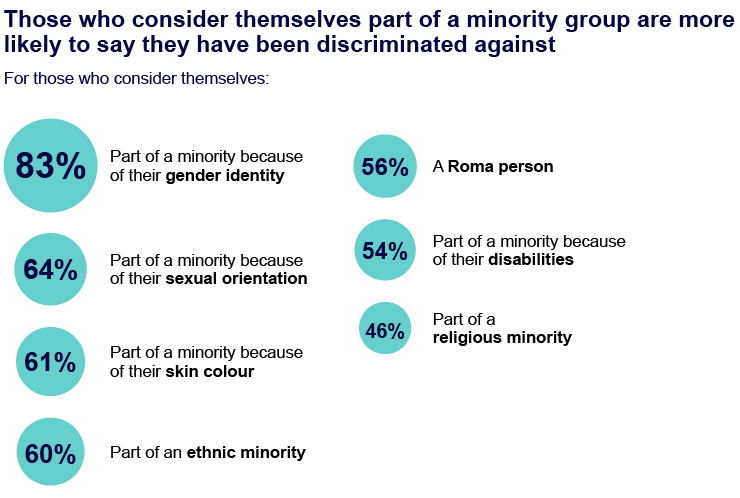
Data from a survey carried out by an American company, Lean In (2024), shows how intersectionality is a key factor in the triggering of these microaggressions and that, contrary to what might be expected, there are several cases where these have increased from 2019 to 2024. The questioning of the expertise of women with disabilities and/or those belonging to the LGBTQI+ community, for example, is extremely high and shows an upward trend in the case of LGBTQI+ women.
3 Microaggressions