5.2 Specific outputs and outcomes
SMART objectives are a simple framework used to set clear and effective goals. The acronym stands for specific, measurable, achievable, realistic and time‑bound, helping make objectives more focused, realistic and trackable. By using SMART criteria, individuals or teams can define what they want to accomplish, how success will be measured and when the goal should be complete.
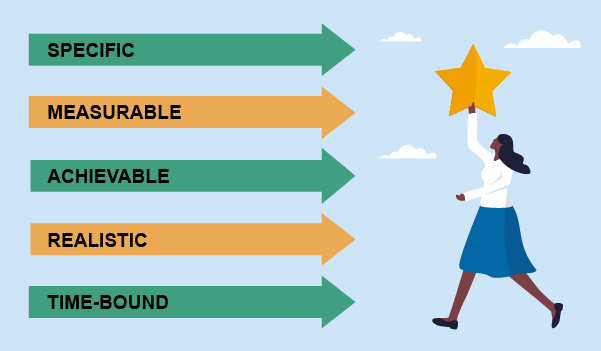
SMART objectives improve performance by making expectations clear, focused and achievable, which helps people work more efficiently and confidently.
Specific – A specific objective is clear, focused, and unambiguous. It states exactly what you want to achieve, who is involved, and sometimes where it will happen.
Measurable – A measurable objective includes a way to track progress or confirm success. This usually means numbers, indicators, or criteria that let you know when your objective has been achieved.
Achievable – An achievable objective is realistic given your resources, skills and time, but should still be challenging. It shouldn’t be impossible, but it shouldn’t be trivial either – something that can reasonably be accomplished.
Realistic – A realistic objective is sensible and achievable given the available resources.
Time‑bound – This helps maintain focus and ensure the objective has a clear deadline or timeframe.
Activity 6 Identifying outputs and outcomes
Spend some time thinking about what outcomes and outputs need to be in place for you to achieve the goal you identified in Activity 3.
Remember to factor in resources, assumptions and risks. It is important to ensure that your outcomes are: specific, measurable, achievable, realistic and time-bound (SMART).
Make some notes about your planned outcomes below, then copy and paste your best ideas into your theory of change record.
 |
|
 |
|
 |
|
 |
|
 |
Discussion
The outcomes and outputs you identify will depend on the remit of your role and the resources available to you. You can develop your theory of change to show the links between different resources, assumptions and risks and the outcomes and outputs you have selected.
Next, go to 6 Integrating evaluation into wellbeing work.
5.1 Common wellbeing challenges and how to address them