1 Gender and power relationships in online meetings

In everyday life gender can affect work interactions. Research indicates that communication, power dynamics and participation are shaped by gender, as society assumes men and women will behave differently. Stereotypes about men and women are based on historical and cultural differences. Traditionally, men have been expected to go out to work, while women were expected to work in the home (the first being more public and the second more private). Men are expected to be providers, while women are seen as caregivers. Society is generally used to seeing men as competitive, task-oriented and logical, while women are viewed as nurturing, intuitive and relationship-focused.
According to research by Tannen (2006), in everyday talk men are expected to use direct and factual language, while women tend to use indirect and polite expressions. Men typically exhibit a ‘report talk’ style, prioritising content, status and direct problem solving. Women on the other hand, engage in ‘rapport talk’, focusing on building relationships, empathy and collaborative problem solving. People tend to believe that women are more skilled at interpreting non-verbal cues and maintaining eye contact, using gestures and facial expressions to convey emotions, whereas men tend to be more reserved in non-verbal communication, reflecting dominance and hierarchical tendencies.
In the workplace men and women are expected to handle conflicts and decision making differently, with men often internalising the process and women seeking collaborative input. Female managers are generally perceived as better communicators due to their openness and emotional connection.
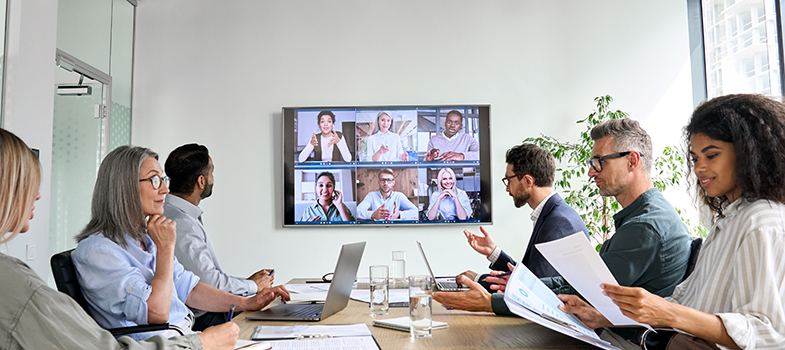
Workplace interactions like videoconferencing reflect existing hierarchies, which can reinforce gender norms. For instance, women are often expected to take notes. However, while these structures can contribute to unequal relationships they can just as easily support equal ones. Online meetings can reproduce traditional power imbalances or offer opportunities to reshape these, where turn taking, interruptions and visibility play crucial roles. Addressing these processes is critical in fostering equitable participation and challenging structural inequalities in remote working environments.
However, it is essential to recognise that these patterns may vary. Understanding these differences and embracing new possibilities by fostering collaboration and adapting communication strategies can improve workplace harmony and productivity.
Now click on the headings in Figure 1 below to find short explanations for each communication category.
Now that you’ve had a chance to review communication categories, reflect further on your experiences in Activity 1 below.
 Activity 1 Ensuring equal participation
Introduction