2.1 Looking at migrants
Before starting this week’s learning, try Activity 2.1.
Activity 2.1: Where are migrants coming from and going to?
Look at Figures 2.1 and 2.2. Where do you think they are arriving and where might they be from?


Discussion
Photographs like these have become commonplace in western media. Terms like ‘migration crisis’ evoke ideas of huge flows of migrants that, in some way, threaten to over-run recipient countries. Those recipient countries are usually seen to be ‘developed’ countries in Europe or North America; the first image is the coast of Lesvos in Greece and the second is of Honduran women crossing the Mexico–US border. When we think of international migration – particularly those of us based in the Global North – we usually think of migration from the Global South to the Global North. We will look at what this assumption about international migration tells us about development.
When we discuss migration and development, we often do so in particular ways:
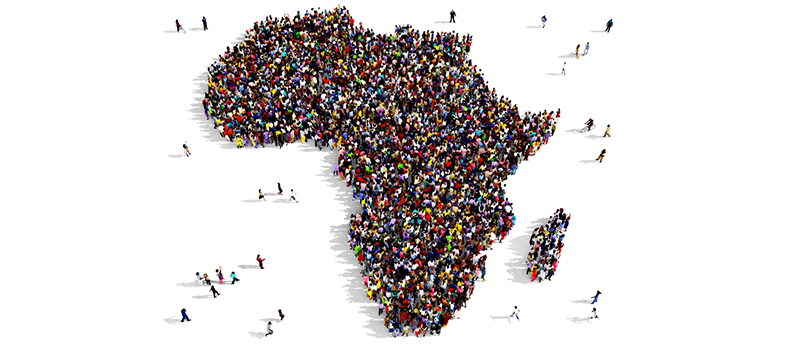
- Much of the literature – like the photos in Activity 2.1 – assumes that the flows are from poorer countries of the Global South to wealthier countries of the Global North. In fact, most international migration – that is, migration from one country to another – is ‘south–south’, meaning that migrants move from one Global South country to another. In the context of Africa, 75% of international African migrants are in another African country (Flahaux and de Haas, 2016).
- Something linked to the point above is that these migrant flows set up further flows in other directions. You may have heard of ideas like the ‘brain drain’, which refers to the loss of talent from Global South countries as skilled migrants leave. The assumption about migrant flows being south–north is that remittances (financial flows from international migrants back to their families in their ‘home’ countries) back to the Global South are seen as compensation. Sometimes these remittances are ‘pooled’, so that a group of migrants may, for example, support their home community in some way rather than just their immediate families. This has become the mainstream view of migration and development, with much of the focus being on the scale of remittance flows back to the Global South.
- The focus of much migration and development literature is on particular levels. For example, remittance flows are calculated as a percentage of overall GDP, a measure of income for an entire country; meaning the focus is at the national level. Alternatively, some study remittances within households and what that means for the well-being of these households, as well as for things like inequality between households and inflation. These levels are treated as discrete – either national or household – but they are often inter-connected. When a particular region has a lot of successful migrants, then remittances can benefit that region. This in turn can lead to inequalities between regions within a country. We need approaches that cut across or connect levels, and address key areas of uncertainty in migration and development debates around whether and how migration affects inequality.
We think that inclusive growth (IG) offers one way to move beyond these limiting assumptions. It allows us to see ‘development’ as multi-faceted, rather than being reduced to one or two indicators like remittances or GDP growth. The mainstream view of migration and development also misses out on some important things like south–south migration and more intangible outcomes like gender awareness.
This week we will examine these debates in more detail and look at how IG can enrich our understanding of the complex linkages between migration and development. You will also get a chance to apply some of the IG concepts and methodologies to real data on migrants.
Introduction