
4.3 What affirmative practice looks like
In the following video, experienced trans-affirmative therapist Ellis Johnson explains some of the elements he feels are essential in an affirmative therapist:
Download this video clip.Video player: ellis_johnson_section_4_summary.mp4
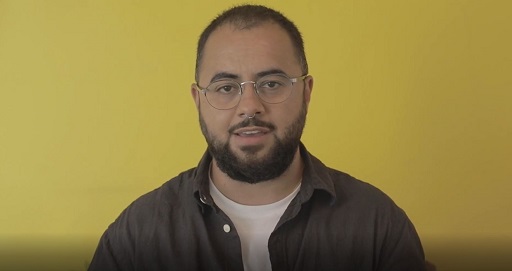
Transcript
ELLIS JOHNSON:
So, I'd say it's really important to meet your client where they're at in their transition. There is sometimes an idea that transitioning is a terrible thing, a scary thing, is a worst-case scenario, it's something that's ruining a client's life. And actually, for lots of clients, perhaps they don't even really need to talk about being trans. Perhaps that's a part of their identity that isn't causing them distress.
For some people, they might want to take it cautiously. They might feel that it's just something to be celebrated and they actually don't really need to sit with the worries and the fears about it. Perhaps that's not their greatest concern.
So, be careful about your assumptions with regard to how the client is going to feel about their transition, whether they're going to be super cautious about it. Or perhaps maybe they're ready. They've been thinking about it for a very long time, and they're ready to get going and they just need you alongside them. So, be careful about what assumptions you're making about your client's relationship with their gender, with their transness.
Be careful about your own assumptions in terms of what you imagine a client wants to move towards in terms of their gender. Be careful that you're not reinforcing the gender binary in the space and in your interactions in your mind. It's really important to leave space for a client to explore their understanding of gender and how their expression might want to come to the forefront – how they might change, how they feel in themselves.
Be careful that you're not reinforcing the idea that they have to move from one box to another box. We want to actually be moving towards an explosion of gender identity, an embracing of movement and change and diversity and expression, and that isn't just about moving from one box to another box. So, be careful about what you expect your clients to want from their transition.
I think in the therapeutic community there's an idea that we should be able to treat everybody the same and that we'll give everybody an equal experience, equally good experience of therapy. I think it's really important to move away from that and recognise that there are aspects of trans lives that people who aren't trans just don't have an idea about. And to that end, it is important for us to educate ourselves as therapists.
There is a vast body of knowledge out there that we can tap into that will inform the way that we work and make it safe and possible to create a safe therapeutic relationship with trans clients. It is on us as therapists to educate ourselves outside of the sessions and not expect trans clients to educate us with everything they know about things that perhaps they don't even need to talk about in that space. So, be aware of the known unknowns, we could call it – the things that we know we don't know and the space for us to know them and to get to know them.
It is important to educate yourself about the lived realities of trans lives, and part of the reason for that is to make sure that you're not casting doubt on the reality of the things that trans clients are bringing to you. One example might be talking about hate crime or racism. It's important for you to have an understanding of the impact of those things and the fact that they are a reality for lots of trans people.
It's not just that trans people live in fear because they're thinking about things in the wrong way. Actually, their concerns about hate crime – for example, violence – are really valid, and they're based on real experiences and real data that we can see around us. So, be careful about questioning too deeply people's fear of walking down the street, for example, when actually, that fear is based in reality – their lived reality.
Interactive feature not available in single page view (see it in standard view).
 Pause for reflection
Do you have any immediate thoughts about what Ellis says? Make a quick note in the box below.
Interactive feature not available in single page view (see it in standard view).
In the rest of this section, you will be considering challenges to affirmative practice and how to work with them. First however, consider the following example of how to work affirmatively by watching this extract from Jake and Patrick’s fifth session.
 Activity 4.3: Jake and Patrick – exploring without undermining
Timing: Allow 15 minutes
By signing in and enrolling on this course you can view and complete all activities within the course, track your progress in My OpenLearn Create. and when you have completed a course, you can download and print a free Statement of Participation - which you can use to demonstrate your learning.
Back to previous pagePrevious
4.2 What is affirmative practice?