
2.7 Window of tolerance
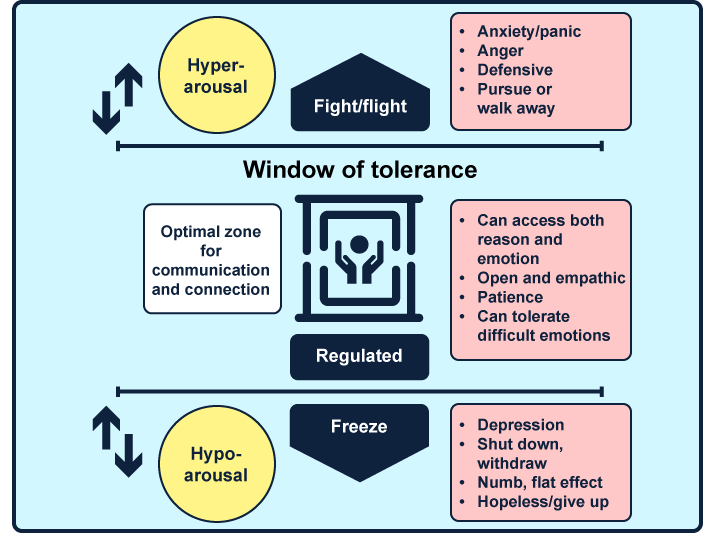
The window of tolerance was developed by Dan Siegel M.D. (1999) who is a renowned American psychiatrist. According to this concept, we each have an optimal zone in which we can function well and cope with stress without feeling overwhelmed. Within the optimal zone, daily tasks and life are easier to manage because stress and emotions can be dealt with effectively.
Everybody has a unique window of tolerance which is shaped by a combination of factors including genetics, life experiences, attachments, social support, and past trauma. Some people can experience high levels of emotional intensity without becoming overwhelmed. Somebody like this could be said to have a wide window of tolerance.
On the other hand, somebody with a narrow or disrupted window of tolerance is less likely to be able to tolerate difficult emotions, resulting in possible upset or withdrawal. Over time, sometimes even daily, the size of our windows can change but overall, the wider our window, the less opportunity for our tolerance to be pushed outside.
The following video animation, The River of Life and the Tale of Two Lands (Farrell, 2018), provides an illustration of how the window of tolerance works.
When pushed outside of the window, a physical imbalance occurs. Two opposing states then emerge, these are ‘hyper-arousal’ and ‘hypo-arousal’, as shown in the model below.
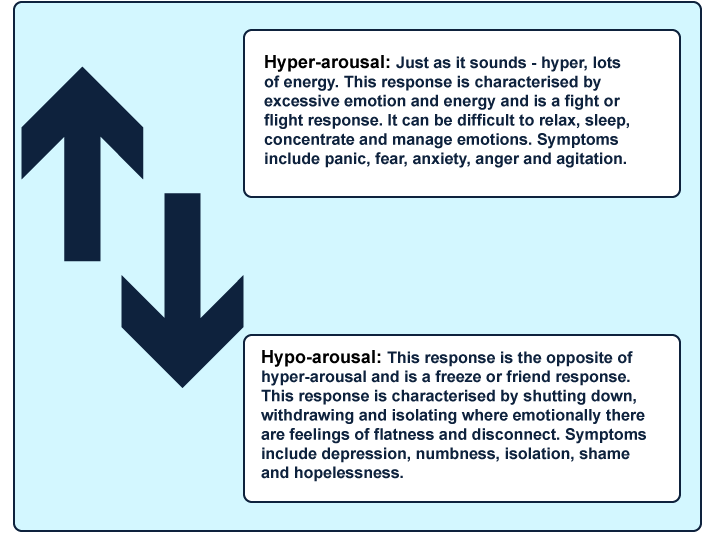
It is important for us all to recognise others' window of tolerance so that we can help them stay within what feels safe and comfortable or get back into their window if they have been pushed out. Knowing your own window of tolerance will also help you to understand when you are feeling overwhelmed, so you can take steps to work more effectively with your own emotions and regain a more balanced state.
2.6 The five F trauma responses