
2 What’s the course about?
There are six units to the course in total. These include the introductory unit you are working through right now, a course summary at the end, and four main topics that will be covered in Units 2–5. You are not expected to work through everything in one go and you can step away and come back later, or in a few days and your progress will be just where you left it.
Read through the summary of each unit next to get a flavour of what you’ll be learning about throughout the course.
Unit 1 Welcome to the course

This unit provides an introduction and background to the course and highlights why it’s important and why it’s needed. Overall, the aim is to make your work meetings more pleasant and more productive by making sure everyone is getting their say. This unit introduces the course and how the activities work.
You’ll also be introduced to the Social Identity Wheel interactive diagram, which helps users think about who they are and how this impacts the way they work.
Unit 2 Being a participant – how to play nicely!

Here you will learn about the various ways you can participate in online meetings. Do you participate actively or do you keep a low profile? Or, more likely, does it depend on the meeting and who’s there? The aim of this unit is to reflect on the many different ways you can participate in these meetings and how you can help create a fairer workplace where everyone feels comfortable to contribute.
You’ll learn about different communication styles, which ones are more effective and how communication becomes gendered, even when you don’t really notice. You’ll learn how to recognise these different styles and how you can respond to them.
Unit 3 Leading the way – effective chairing
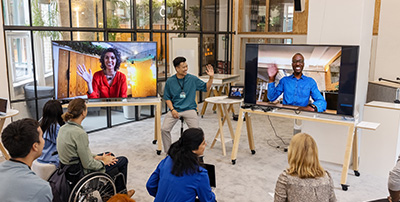
Unit 3 is about chairing online meetings and how different approaches to leadership produce different types of chairing. In turn, you’ll see how the chair can impact a meeting to make it more or less effective and, equally, more or less enjoyable and interesting for all involved. You will also review different chairing practices and have the opportunity to reflect on how and why they work (or don’t work).
Good leadership and chairing should ensure that everyone has a chance to bring their best ideas to the table. But it’s not all about style; who the chair is can also affect the success of a meeting. This unit will explore the role of gender and stereotypes in leadership as well.
Unit 4 50 shades of humour

It may not all be fun and games… but some of it is. This unit is about being funny in online meetings. Yes, you can! Humour is a common workplace feature that helps to build relationships among colleagues and teams. It can diffuse tension, lighten the mood and make people more comfortable, but it can be negative as well as positive.
Humour can be gendered, and it can be used to reinforce stereotypes and put people in their place. This unit will cover humour in online meetings and what a powerful tool it can be.
Unit 5 Could this meeting be an email?

‘Why am I sitting in this meeting when they could have just sent an email?’ Yours and other people’s time is a limited and valuable resource, and you don’t want to be wasting it. What you may also have noticed is that time doesn’t impact us all equally. Some of us have more time available than others. And time is gendered.
This unit will look at how time pressures affect men and women differently. Good time policies can contribute to gender equality and to improving the wellbeing of our co-workers.
Unit 6 What you’ve learned and farewell

This unit brings us to the end of the course and reflects on what you have learned across the units. It will go back to some of the ideas you had at the beginning of the course to see what may have changed. You’ll also revisit the Social Identity Wheel and consider how it might be a useful tool for others who participate in online meetings.
Finally, you will review what you’ve learned about leading and being part of online meetings to improve your practice and experience.
1 The growing importance of online meetings