Model Answer Unit 5, Activity 7.0, Bilingualism and Dementia in Social Care
This is a model answer. Your notes might be different.
I had not realised that people, who are bilingual, when they develop dementia often revert to speaking their first language, the one they learned as a mother tongue. This can have huge implications because they can live in a context where their mother tongue is not spoken and they can quickly become very isolated, even in their own family, where members speak their second language.
I had not realised that this issue around bilingualism in dementia has huge implications all over the world in our age of migration and globalisation, which, for example, means first- generation migrants who develop dementia may find themselves unable to communicate with their own children as they revert to the language they used in their youth. And it is not only the language they lose, as language has strong connections with culture and cultural identity.
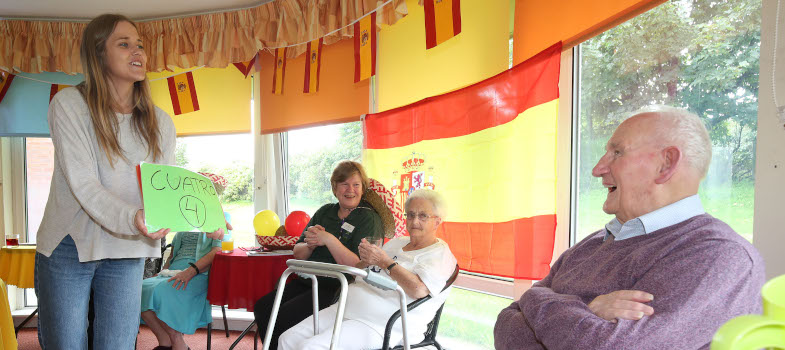
Carers who speak various languages can play a very important role in supporting the wellbeing and social cohesion of bilingual people with dementia in care. Carers who can deliver languages learning can even enable fellow care home residents to communicate with bilingual people with dementia in their first languages.
Download this as a Word document:
()
Return to Unit 5