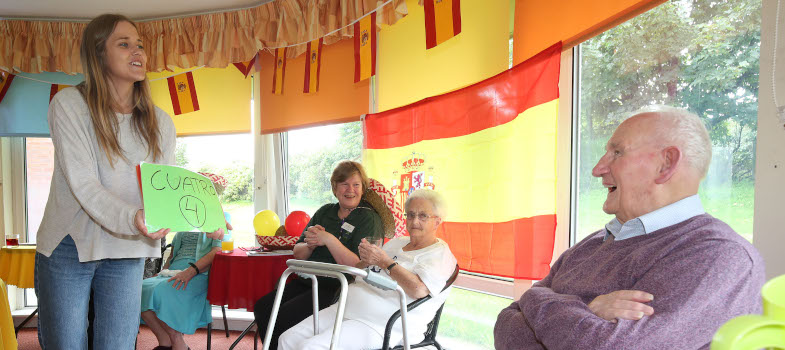
Older People in the United Kingdom, Unit 2 Activity 1.1
According to Age UK’s (2019) factsheet Later Life in the United Kingdom 2019 there are nearly 12 million people aged 65 or over in the UK. It is expected that one in five people in the UK (21.8%) will be aged 65 or over in 2030.
Older people as carers
Caring for someone in the home is common among older adults. More than half of carers aged 65+ care for someone that they live with.
The kind and amount of care unpaid carers provide varies considerably. According to the NHS Information Centre Survey of Carers in Households (2010):
-
82% provide practical help such as preparing meals, doing laundry or shopping,
-
76% keep an eye on the person they care for,
-
68% keep them company,
-
62% take the person they care for out,
-
49% help the person they care for with financial matters,
-
47% help the person they care for deal with care services and benefits,
-
38% help with aspects of personal care,
-
38% provide physical help.
There are estimated to be around 700,000 to 800,000 unpaid carers in Scotland, and around 10.6 million people in the UK are unpaid carers. That means that 1 in 5 people are providing unpaid care. Over 1 million people care for more than one person. The economic value of the care that is provided was valued at a £530 million per day during the pandemic, or £193 billion a full year – exceeding the value of the NHS (Carers UK – 2020).
Health issues for older people
-
Sensory loss
Based on the Age UK (2019) factsheet, 1.6 million older people have sight loss in the UK and are more likely to have problems with daily living, lower quality of life, life satisfaction, wellbeing and confidence and higher levels of depression.
More than 40% of people over 50 years old experience hearing loss, rising to 71% of people over the age of 70. In care homes, 75% of people have hearing loss but the identification and effective management of hearing loss in care home residents can significantly improve their quality of life.
-
Dementia
7% of people over the age of 65 and 17% over the age of 80 have dementia. Dementia can trigger disability in later life. 70% of people in care homes have dementia or severe memory problems.
-
Mental Health and Wellbeing
Mental and physical health has an impact upon each other, and it is estimated that 40% of older people have a mental health problem. This increases to 50% of older people in hospitals and 60% of those in care homes. Depression is the most common mental health problem among older adults.
Loneliness and isolation can impact on mental health and wellbeing as well.
Older people in care homes
400,000 older people are in care homes in the UK
According to the Scottish Social Services Council (2022), there are 8.7% vacancies in the adult social care sector. Although there was a growth in number of overseas staff, services are still reporting difficulties to fill vacancies, with care at home services (78%) and care homes for older people (77%) reporting vacancies significantly above the national average for all care services.
References
Age UK (2019), Later Life in the United Kingdom 2019, [online] https://www.ageuk.org.uk/globalassets/age-uk/documents/reports-and-publications/later_life_uk_factsheet.pdf, accessed 17 February 2025.
Carers UK. (2020). Unseen and undervalued. The value of unpaid care provided to date during theCOVID-19 pandemic, [online] https://www.carersuk.org/media/gi1b4oup/unseenandundervalued.pdf , accessed 17 February 2025.
NHS Information Centre for Health and Social Care (2010) Survey of Carers in Households 2009/10.
Scottish Social Services Council (2023) Staff Vacancies in care services 2022 [online] https://careinspectorate.com/images/documents/7278/Staff%20vacancies%20in%20care%20services%202022.pdf, accessed 17 February 2025.
This document is also available to download as a word document (
()
).
Return to Unit 2