
Decision-Making

Learn how to make ethical decisions about including adults with potential capacity concerns in research. This section outlines the step-by-step decision-making process, from assessing capacity and providing supports to consulting personal or nominated consultees, ensuring participants’ rights and wishes are respected.
Decisions about research participation should be guided by the individual's capacity, wishes and preferences, with appropriate adjustments and supports provided wherever needed.
This video outlines the decision-making process for recruiting adults to research studies, including how to respond to concerns about capacity and when to seek advice from a personal or nominated consultee.
Flowchart of the decision-making process
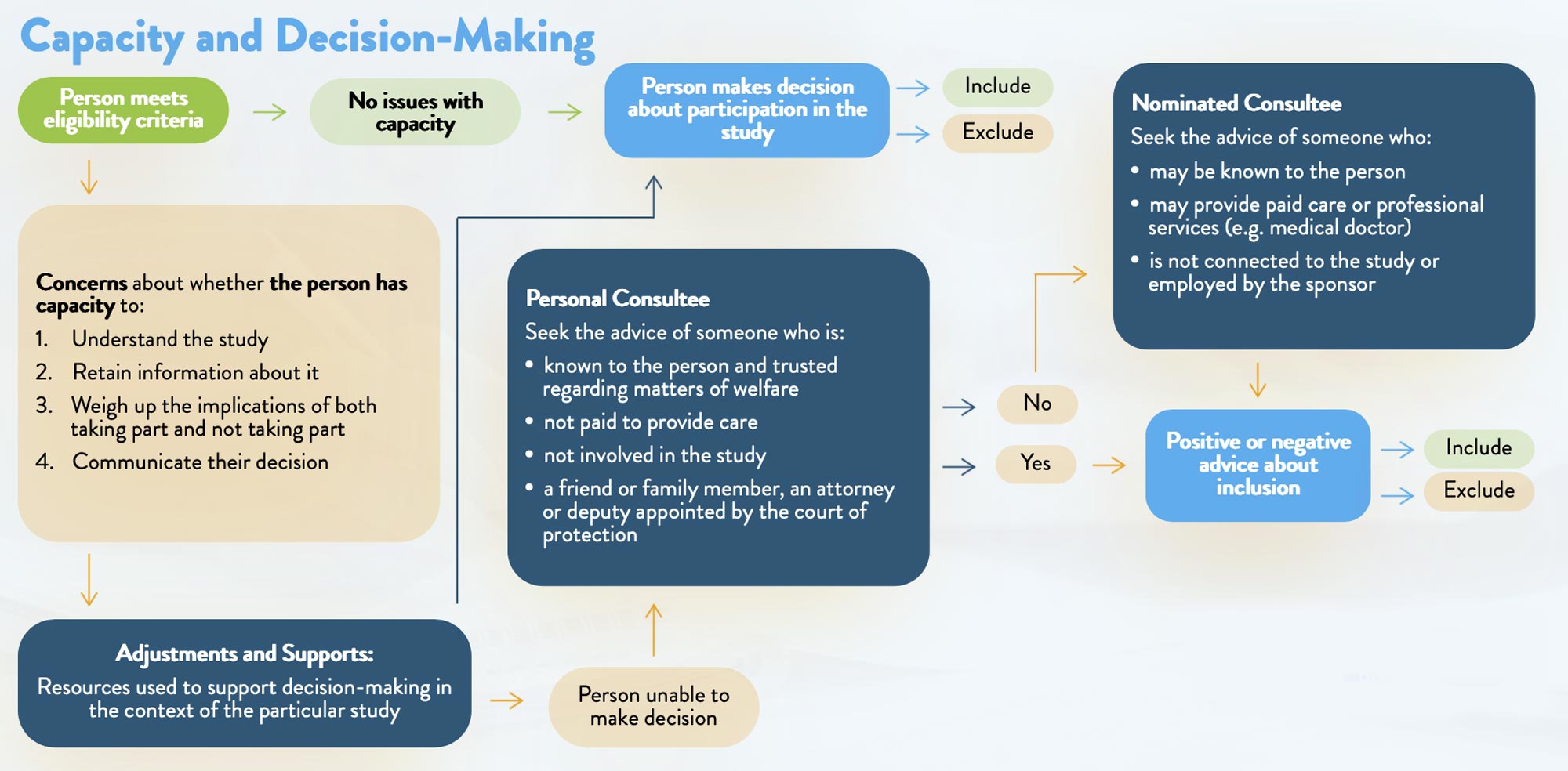
The following flowchart provides a visual overview of the process, from identifying concerns about capacity to providing adjustments and supports or seeking advice from a consultee.
Summary of the decision-making process
No concerns about capacity?
If there are no concerns about capacity:
- The person makes their own decision about participation.
- Outcome: Include or Exclude based on their choice.
Concerns about capacity?
If there are concerns about whether the person can:
- Understand the study
- Retain information about it
- Weigh up the implications of taking part or not
- Communicate their decision
Adjustments and supports: Provide resources to support decision-making in the context of the study.
If the person is now able to make a decision
- The person makes their own decision about participation.
- Outcome: Include or Exclude based on their choice.
If the person is still unable to make a decision
Seek advice from a personal consultee, someone who is:
- Known to the person and trusted regarding their welfare
- Not paid to provide care
- Not involved in the study
- A friend, family member, attorney or court-appointed deputy
The consultee advises on the person's likely wishes and feelings about participation.
- If positive advice about inclusion: Include, subject to the relevant research requirements and the person's wishes.
- If negative advice about inclusion: Exclude.
If no personal consultee is available
Seek advice from a nominated consultee, someone who:
- May or may not know the person
- May provide paid care or professional services, for example, a doctor
- Is not connected to the study or employed by the sponsor
The nominated consultee also advises on the person's likely wishes and feelings about participation.
- If positive advice about inclusion: Include, subject to the relevant research requirements and the person's wishes.
- If negative advice about inclusion: Exclude.
Remember: A consultee provides advice about the person's likely wishes and feelings; they do not give consent on the person's behalf. The individual should continue to be supported to engage in the research decision-making process, and any indication that they do not wish to participate must be respected.