Italian Passport - Transcript - Part Three
Italian Passport Part 3
Rosie: How do you feel the engagement developed over the course of the weeks?
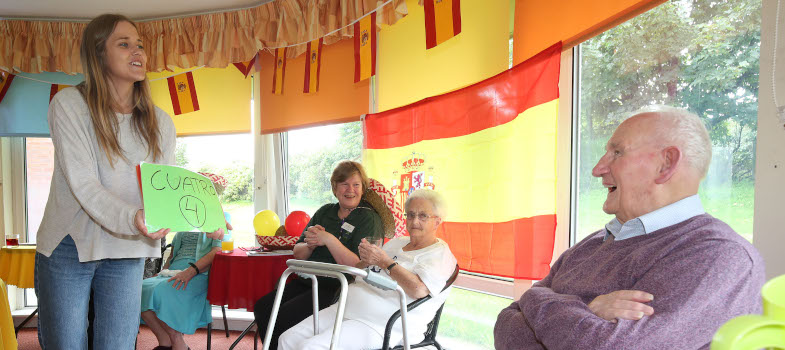
Eleanor: It did really well because they built up their characters as well and even the relationships between the different characters they were playing built up and developed too. So there was one bit where they'd kind of like bibbled about in Rome or Venice or somewhere and then they were like trying to get the train somewhere or other and they because they'd had like several weeks of narrative and their characters had got to know each other there was this big debacle completely unprompted by me and I think one of them actually said it in Italian as well about who's going to be paying for the train ticket?And so it was then like oh is the mafia boss or the opera diva because they've got the money are they going to be paying for the train ticket and it went on for quite a while because it was quite fun and I was quite, I was really pleased that this had come really spontaneously from them playing along with it and then the guy who was playing the Pope was like,"I've had enough of this I'm gonna have my own papal carriage" [laughter] and like go entirely on his own and so it allowed them I think to kind of banter with each other as well in a very playful way and that did definitely build up as we went on. I think because I would leave them on a little bit of a like a cliffhanger as well as like, who has stolen the recipe, and I hope that that did actually, they did want to find out and they were kind of like, "oh God yeah what are we gonna do this time?"
01:28
Rosie: Sounds wonderful. So where do you think, you know, if you were to to do this again, would you repeat this type of game with these learners or another group of learners? Is there anything you would do differently or how do you feel you would you know go about it?
01:51
Eleanor: Yeah, I definitely, definitely do it again and I think like the language learning it's potential is really limitless because you could like ultimately be conducting the whole game in Italian and you're then fluent right. But you can take it in little steps as well and you're just maybe conducting most of it in English or whatever the common language is but then throwing in a few odd words of vocab? I really think the kind of imaginative play was really good as well because they were really like giggly and loving it when they were doing it and I think that level of kind of like silliness and goofiness and having fun is a really important part of learning and especially learning in a classroom environment and that element of kind of relating to each other I think is really important especially for language learning because we use language to communicate with other people.
I think if I was to do it again I would really love the chance to be able to do it over a longer period of time than I had the chance to do it with this particular group just because of the pandemic and just because as I was just saying then like it did develop so much as the weeks went on and it would have been really nice for them to get like even more into their characters and kind of develop that history of the group and history of the kind of little world that they were in as well.
Florence: Yeah, I think also, it's the first time I'd written anything like this for this kind of audience I think I made it too prescriptive, because I know they were they were quite upset with the outcome. [laughter]
Yeah, the twist was that his grand, the pizza chef's grandma had stolen the recipe to make him believe in himself and they were having none of it right? They were really upset with that.
03:24
Eleanor: They wanted to be able to like get a thief and they were like "God, no".
Florence: Yeah, so maybe if we were to do it again we would allow for more of a fluid changing of the story in there.
Eleanor: Yeah.
Baerbel: Can I just ask one question in between here? How do you think it worked to do this with senior learners because I mean these are obviously older people and you know they might never have encountered a game like Dungeons and Dragons before. Did you feel it it took more sort of explaining of it or how did you feel their age affected the whole game?
04:06
Eleanor: Yeah I think it worked because it wasn't too like the only kind of Dungeons and Dragons escalement to it was the kind of role play and maybe the rolling of the dice as well and a lot of the kind of high fantasy bits of Dungeons and Dragons which I find alienating, let alone like a 90 year old, like that wasn't there and so I think the kind of Italian stereotypes helped for that because they were able to kind of, that was part of the reason why they wanted to learn Italian I think was, because that was what their idea of Italy was and so I think that definitely helped.
04:40
I think they really enjoyed the freedom of it as well because I think, maybe as we mentioned earlier on in this discussion, it wasn't as if they were able to do like an Erasmus year abroad in like Bologna and so it was really nice I think to be able to have this element of like yeah this is what it's like to kind of like wander around in Venice or in Italy. It was I think quite that freedom of it and imaginative freedom was really good.
05:08
Rosie: How do you feel in terms of their you know creative input? How do you think that worked over the course of the weeks?
Eleanor: Yeah that worked really well as well because it was I was really pleased because they got so into their characters and so into role-playing their characters that they would often ask me like, "Oh, how would I say this in Italian?" because they wanted to describe their characters in such a way and so a lot of that was entirely coming from them. There was one bit where I think I'd allowed them to take like one object with them like when they were doing this gondola chase to try and get the pizza recipe. And so I was like you know it could be like any object at all it could be the objects we've just learned the vocab for but then I think the one who was the playing the Nonna was like, "Okay, how would I say apron? How would I say rolling pin?" and so it did allow a lot of them... and that sort of stuff maybe wouldn't have come up in any other... I think one of them wanted a spade as well. I can't remember why they wanted a spade, but like... And so I was it yeah that's the sort of vocab which wouldn't have come up in another kind of language course maybe necessarily because it was quite like random. But it also showed that they were like, it was coming from them and so they were quite engaged in it and quite engaged in creating this like, personality as well.
06:34
Rosie: Sounds like they really really dived into it and they absolutely loved it. It did help them to get a lot out of the course as well and come out of their shell.
Do you feel that there was an initial bit of resistance maybe or concern when you explained the game the first time around?
Eleanor: Yeah I think so. It was something I was a little bit nervous about but the passports did help for that in terms of, "Right, we're gonna create this character which we will be playing as first of all. We can add these details. I think as well one of the challenges of these sorts of role-playing games is because it is so open it's got a lot of potential but also you can sometimes be a bit kind of paralysed and not know what to do because you could do literally anything. And so say like with the Marco goes to the group like "Oh god I need your help finding this pizza recipe" and they're like what do I do? And so it was in that case I did start off doing a little bit, "Oh so you could do this. You could go and search and here's kind of the underground of the thing. You could ask more about the about his grandma. You could say you don't care and walk out. I think that then they were a little bit kind of, I can't think of the right word, I guess a little bit hesitant at the start but I think giving them some prompts about the different things they could do definitely helped and they were like okay I could do this and then eventually they bought into it and as the weeks went on they were like I'm gonna do this now.
08:00
Rosie: Fantastic, well let me think. I think from my end that is really everything I want to ask but perhaps if there is any message you'd like to share just something for your group of learners or for somebody trying to do something similar with their learners with their senior learners what would you recommend perhaps?
08:29
Eleanor: I think probably just embracing the spirit of kind of silly improvisation probably and it is that emphasis then more on kind of communication and relating to each other which is so important and what language does. And that kind of you probably won't have all the answers and probably as the kind of, you call it the game master don't you? that is the person like leading the game, like I found myself sometimes in a bit like, you have to think on your feet just as much as the characters do, if not more, because you're trying to kind of like do all these various different characters and the world, but it kind of doesn't really matter and if you make people laugh and they have fun then that's the kind of purpose of it as well. But yeah I got and I was saying to Florence earlier that I was really excited at the idea that people might actually be using this game now, like up and down the country, and so I really really would encourage people to try it because it worked really well for the group that I worked with and I think it's got a huge amount of potential.
09:28
Baerbel: Can I just ask one final question what I love about the idea is that people can create an alter ego you know. Did you feel that, you know, I mean you've explained really well how people got into that and how they sort of made it come to life as well. What did you feel was the sort of impact in taking them away kind of from the situation that they find themselves in? You know being maybe in a care home or in a community centre, being kind of restricted to the present, but moving that into an imaginary world and in an imaginary role. What kind of impact did you feel that had on on the learners?
10:11
Eleanor: Yeah I think just like when they were playing it was very joyful and it was, there was like a huge amount of laughter and that level of freedom where they could have done literally anything and it's not even then kind of not just being in a care home and so maybe you're being in Italy and you're able-bodied and you're completely able to do everything and you're strong but it's also a fantasy world and so you've maybe got like a rolling pin and you can bash in the head of the guy who's stolen a pizza recipe and that's fine. Like there was there was one bit where I think the guy who was playing the Pope was like okay I really want this to happen so I'm just going to pray for it to happen because I'm the Pope. And yeah okay fair, so I got him to like roll his dice to see how well that had happened and he got like the full number, so I was like yeah that's gone absolutely perfectly, don't worry about it. And they loved that and they had like a massive giggle about it and then equally as well there were other ones where say the mafia boss was trying to like intimidate someone so I was like I get out my gun and I like, she also didn't have much Italian but because she wanted to try and use her Italian as much as possible, when she was basically, "I'm playing the mafia boss so I'm going to try and use that to intimidate the person who I want something out of," she'd just go [flexes muscles], "I'm very strong," which is really cute. And then a similar instance of that was like okay cool you want to try and do that roll for it and she got a really really low number and completely failed and they loved the idea that then the mafia boss who's really kind of like hench and intimidating, the person was just having nothing of it and like wasn't intimidated at all. And so it just let people kind of be silly and like escape a little bit from kind of like what always happens, and what must happen, and it just allowed that place for kind of play yeah
If you came from the page with the video, close this tab to return.
If you came from the Course Page, hit the back button in your browser.