
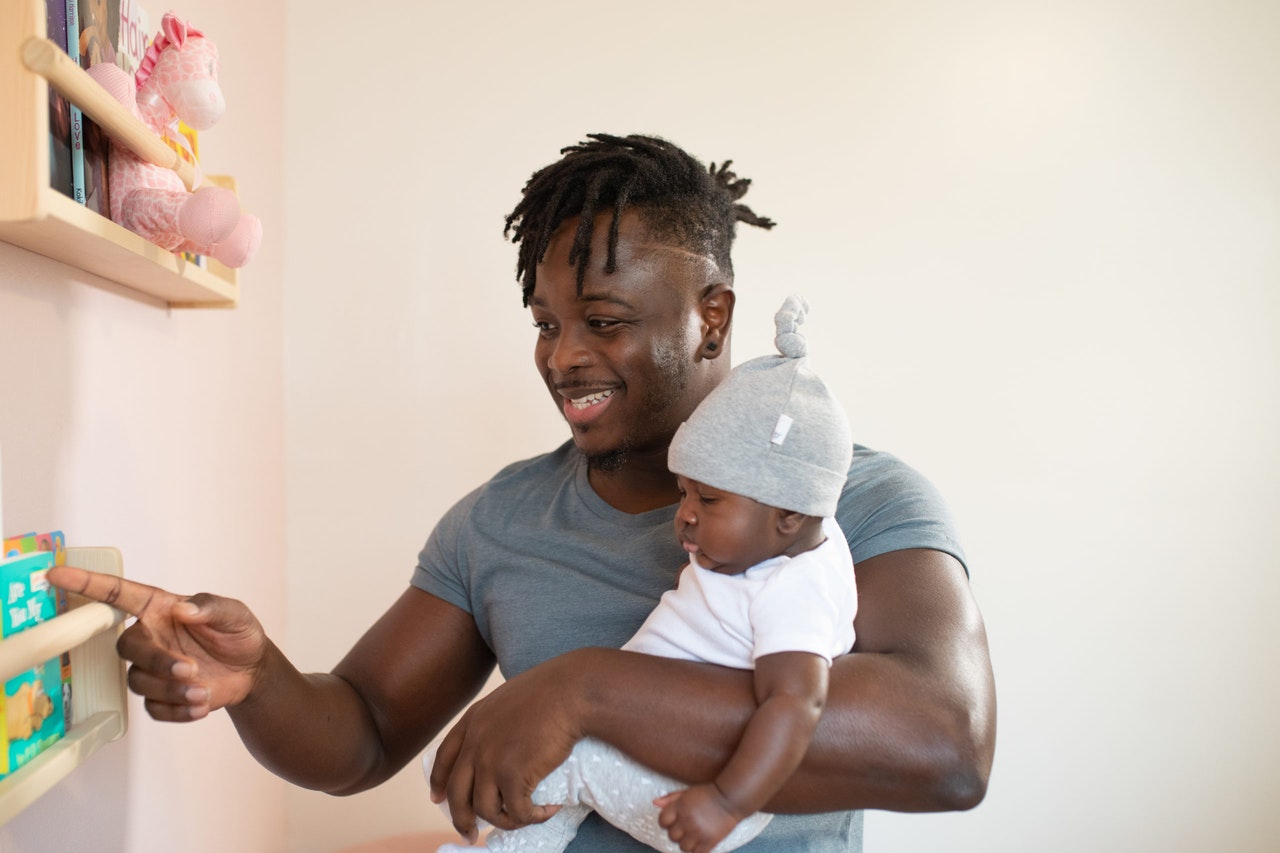
Increasingly, it seems, the only good father is one who is present – and not only present but involved, ‘hands-on’, taking an equal share in childcare.In the aftermath of the 2010 summer’s riots in English cities, prime minister David Cameron described the violent scenes around the country as the result of a ‘slow-motion moral collapse’, and he laid the blame on (among other things) ‘children without fathers, schools without discipline and reward without effort’. He wasn’t the only one to see absent fathers as part of the problem: from across the political aisle, Tottenham MP David Lammy expressed anxiety about the kind of role models filling the ‘father-shaped hole’ in many young men’s lives.
Even if we don’t go along with the notion that a lack of father figures is to blame for social disorder, there’s now a general acceptance that the involvement of fathers is important for children’s healthy development. In the past, it might have been acceptable for fathers to act simply as breadwinners and to leave bringing up the children to mothers, but not any more. Increasingly, it seems, the only good father is one who is present – and not only present but involved, ‘hands-on’, taking an equal share in childcare.
But if men are to be more involved in their children’s care and upbringing, where are they going to learn how to do it? My own interviews with fathers, as part of a research study on fathering identities, suggested it certainly wasn’t from their own dads. The men I spoke to were fairly ambivalent about the way they had been ‘fathered’: most of them admired their dads, but they didn’t see themselves following their example. This was summed up in a telling comment by Paul, one of my interviewees, who said of his dad: ‘I don’t think he had much time to be a loving father’.
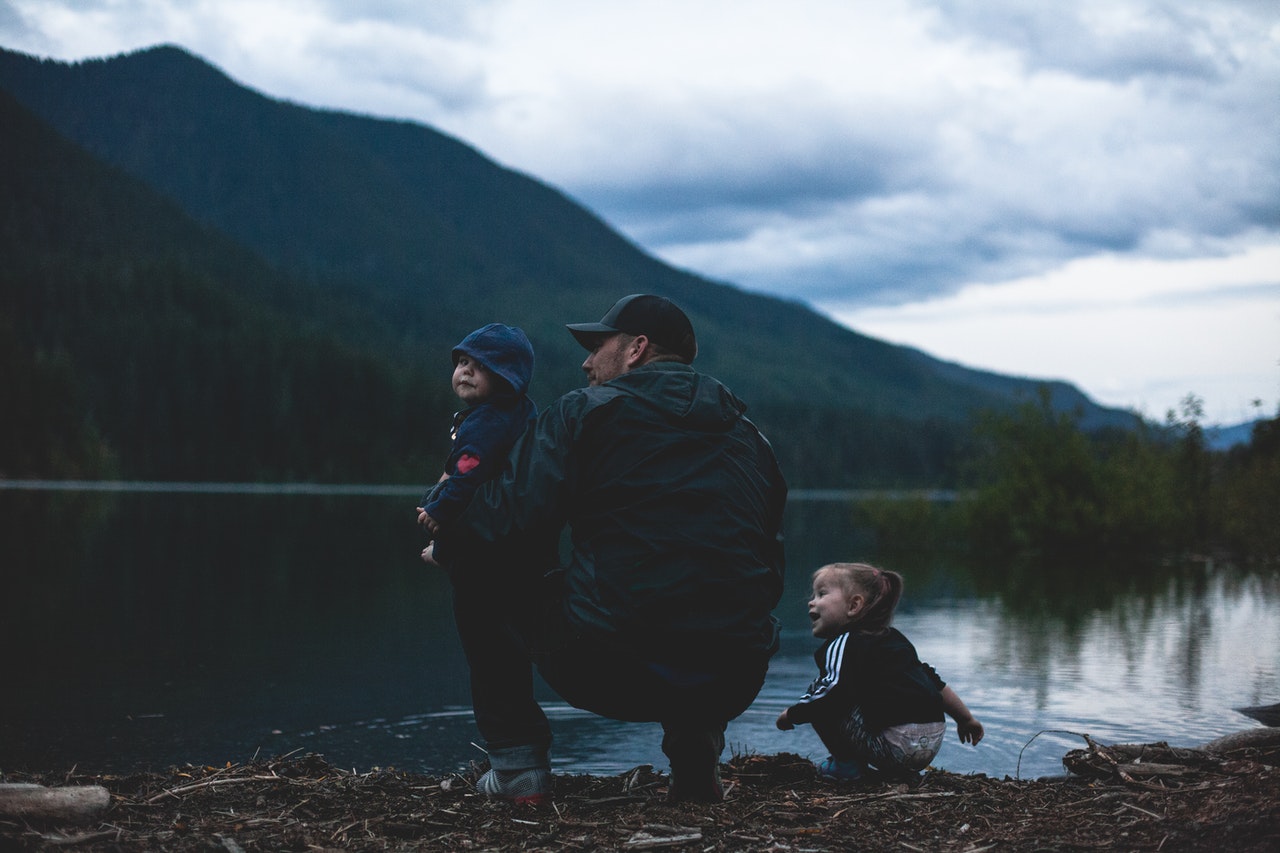
Sean, who was closely involved in the care of his young children, commented: ‘The fact that I might have to get my daughter up and wash her and give her a meal and make that some kind of experience that’s nurturing, I wouldn’t really be able to recollect a memory from having had that from my father.’ Instead Sean, like a number of other men I interviewed, said it was his mother who was his role model in learning to be an involved and caring father: ‘In the sense of emotional connection, or practical needs being met, I would certainly perceive those as coming mostly from my mum.’
When boys’ family lives have been discussed, it’s usually their relationship (or lack of relationship) with their fathers that has been the main concern...This was borne out by another research study that I carried out, exploring boys’ relationships with their mothers. Recent years have seen a growth in research about young men and young masculinities, but most studies have focused on boys as part of male peer groups rather than as members of families. When boys’ family lives have been discussed, it’s usually their relationship (or lack of relationship) with their fathers that has been the main concern – which takes us back to that Cameron speech about the riots.
This means that mothers’ influence on boys’ development often gets squeezed out of the picture. But my research, analysing interviews conducted with boys over a 10 year period, from their teens to early twenties, demonstrated that mothers were often tremendously important figures in young men’s lives.
One of the ways in which mums were important to these young men was in helping them to learn about relationships – and providing a model for their own future roles as parents. Khattab, a young British Asian man, said ‘I can’t wait till I’m a father’, and when asked how he planned to bring up his children, instantly replied: ‘Like my mum…I’ll try to, 100%.’ He went on: ‘My mum’s always been easy with us, yeah, but she’s always like, you know, always like brought us up in a good manner’.
Since the riots of August 2010, there’s been a lot of talk, by politicians and pundits, about young men’s apparent need for more positive male role models – whether that’s their fathers, teachers, or others in the community. But my own research, both with fathers and with young men themselves, suggests that many boys learn some of their most important adult skills – including how to be caring, involved fathers – as much from their mothers and from the other women in their lives. Perhaps we need to pay more attention to boys’ need for positive female role models if we’re to develop a new generation of well-adjusted young men.
-
Young lives: is now a good time to be young?
Learn more to access more details of Young lives: is now a good time to be young?This free course, Young lives: is now a good time to be young?, looks at young lives in the UK today, asking the question is this a good time to be young? It focuses on some of the factors that influence the divergent lives and complex experiences of children and young people today, taking an interdisciplinary approach to the study of the ...

-
Supporting children and young people's wellbeing
Learn more to access more details of Supporting children and young people's wellbeingThis free course, Supporting children and young people's wellbeing, looks at some of the broader concerns regarding wellbeing and the idea that children and young people today are increasingly reporting feelings of unhappiness. By completing the activities, you will be introduced to different ways of understanding children and young people’s ...

-
Working with diversity in services for children and young people
Learn more to access more details of Working with diversity in services for children and young peopleThis free course, Working with diversity in services for children and young people, will provide you with an understanding of the ways in which diverse and intersecting social identities structure the lives and experiences of children and young people, and the implications of those identities for professional practice. Although designed ...

Rate and Review
Rate this article
Review this article
Log into OpenLearn to leave reviews and join in the conversation.
Article reviews