
In a world that moves fast, every week brings a new technological development: smarter AI, more immersive virtual worlds, more devices quietly collecting data in the background. With all this progress comes a wave of tricky questions. What are the risks of this fast-paced approach to design? Who’s making decisions about the products and services we use on a daily basis? How do we design technology in ways that help, and don’t hinder… or harm?
These aren’t hypothetical fears. There are real worries about privacy, biased algorithms, and how misinformation spreads like wildfire online. Add in concerns like job losses through automation or the environmental impact of manufacturing, and it becomes clear that designing technology isn’t just about creating something new, but also about understanding the consequences of what we make.
This is where design ethics comes in
Designers haven’t always been central to conversations about ethics. For a long time, ethics lived in academic papers, risk assessments, or occasional organisational workshops—somewhere ‘out there,’ but not necessarily in the daily flow of design work.
Then something shifted (Zhang, 2023).
When ChatGPT 3.5 arrived in late 2022, suddenly everyone was talking about AI. Only a few months later, an open letter from the Future of Life Institute (2023) called for a pause on training AI systems more powerful than GPT‑4. They argued that we needed time to breathe, reflect, and figure out how to make AI safer and more trustworthy before it outpaced us completely. To look at the risks of this ‘race to replace.’
This surge of public attention didn’t just shine a light on AI. It reignited a bigger conversation about ethics across the whole design and technology landscape. It felt that ethics had ‘regained traction,’ and designers started thinking more about the ripple effects of their work.
But ethics is fuzzy
One of the challenges with design ethics is that no one fully agrees on what it means or how it’s done. Is ethics about avoiding harm? Promoting fairness? Respecting user autonomy? Following company values? Depending on who you ask, you’ll get different answers.
That’s why my research focuses on a key question: where is ethics located in design practice?
Not in a physical sense, of course. Instead, I look at where ethics appears in the day‑to‑day reality of design work. Who’s doing ethics? How are they doing it? At what point? Using what tools? And how do these decisions fit within the structures of organisations, rules and regulations, and power dynamics?
Ethics isn’t just about big philosophical debates. It’s also about small choices made in tight deadlines, conversations in team meetings, and the tools and methods designers use to make their work visible.

Compliance does not equal ethics
A common assumption in organisations is that once you’ve met the regulatory requirements, you’ve ‘done ethics’ (Giddings, 2022). Boxes ticked. Job done. But it usually isn’t that simple.
Rules are almost always based on past problems, not future ones. Technology changes much faster than regulation ever can. That means designers often find themselves working in the grey areas—in the gaps between the hodgepodge of policies and regulations and between what the rules say and what the product actually needs. As one designer I interviewed as part of my empirical study put it:
‘There are these massive gaps in between these old compliance models—big enough to drive a truck through. And so we try to fill in the gaps.’
Designers are close enough to see emerging problems but not always empowered to raise concerns directly. Ethics might be seen as too abstract or too time‑consuming. As another interview participant put it:
‘I get resistant about like going into a big ethics deep dive because the word is so disengaging.’
And so designers get creative.
They frame ethics as usability issues. They build prototypes that highlight what could go wrong. They use the language their organisation already values – things like risk or innovation – to make their point heard.
This is ethics done through practice – situated in everyday decisions, shaped by workplace power dynamics in which designers operate (Foucault, 2023; Papanek, 2019; Schön, 1983).
Boundary objects: a way to make ethics visible?
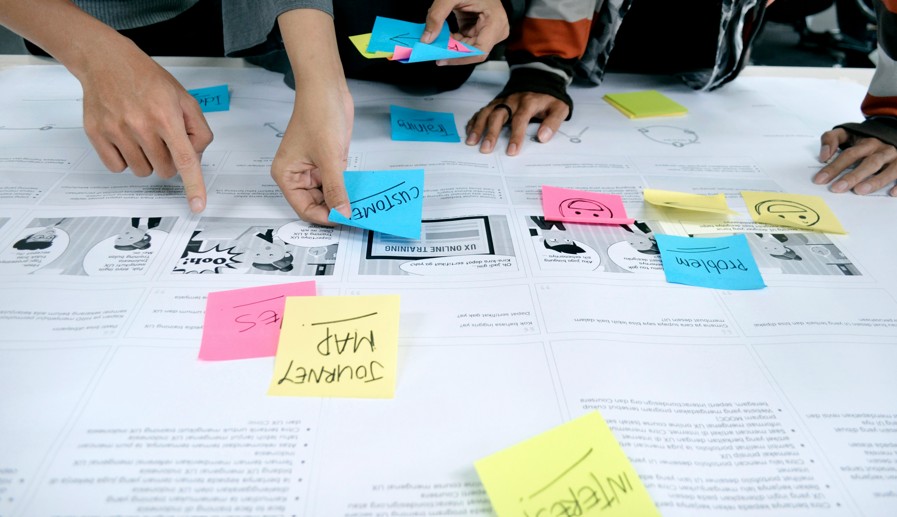
To study ethics in action, I use boundary objects (Star & Griesemer, 1989) – a concept from STS (Science and Technology Studies) that refers to things that are flexible enough to be interpreted differently by different groups, but stable enough to help those groups work together.
In design, boundary objects can take the form of guidelines, templates, prototypes, diagrams, checklists, or even industry- or organisation-specific terminology. They enable productive conversations among people from different teams, who have different priorities, or don’t see themselves as doing ‘ethics.’
By tracing how these objects move through a project – who uses them, how they change, where they get stuck – we can see ethics being done in real time.
Rather than relying solely on formal statements or compliance checklists, designers are doing ethics through practice. And by paying attention to the boundary objects they use, we can study ethics not as an abstract idea, but as something real, visible, and measurable.
Read more articles like this
-
STEM postgraduate research
Learn more to access more details of STEM postgraduate researchThis content hub highlights the diverse range of topics explored by postgraduate research students in STEM (Science, Technology, Engineering and Mathematics) at The Open University.

Study a free course
-
Business ethics
Listen now to access more details of Business ethicsShould companies consider anything but their shareholders? What can they learn from philosophy? Discover business ethics

-
Introducing ethics in Information and Computer Sciences
Learn more to access more details of Introducing ethics in Information and Computer SciencesAlthough ethics is often viewed as an academic specialism or an add-on to training programmes in technology and science, it is in fact an area of the utmost relevance to professionals and, indeed, everyone. This free course, Introducing ethics in Information and Computer Sciences, draws upon examples taken from dialogues, plays and the media to ...

-
Design
Learn more to access more details of DesignThis free course looks at the process of design, from assessing the complexity of design as an activity to exposing the difficulty in making general conclusions about how designers work. You will be able to identify innovation in a wide variety of designed objects and evaluate the impact of this innovation.

Rate and Review
Rate this article
Review this article
Log into OpenLearn to leave reviews and join in the conversation.
Article reviews