1,185 search results

Reaction injection moulding (RIM) and Reinforced reaction injection moulding (RRIM)
Science, Maths & Technology

Reaction injection moulding (RIM) and Reinforced reaction injection moulding (RRIM)

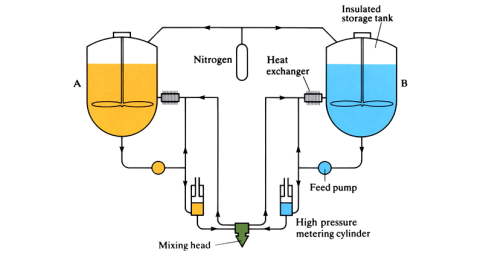
...C) Mould temperature (˚C) Injection pressure (105 Pa) Urethane 32 - 49 77 - 93 103 - 207 Nylon 71 - 129 129 - 138 14 - 55 Epoxy 38 - 71 93 - 149 34 - 103 Materials: At present, polyurethanes, epoxy and polyester. The most common reinforcement material is 1.6 mm hammer-milled glass, but flaked glass, 1.5 mm chopped strand glass, mica, wollastonite and fibres of nylon,...
Electroless plating
Science, Maths & Technology

Electroless plating

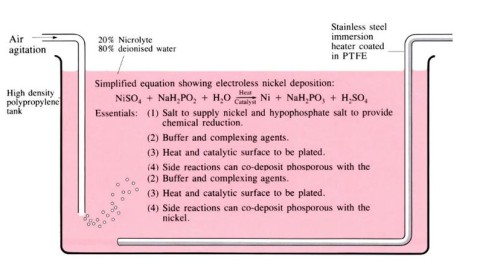
...C for 60 min). Gives more uniform deposit than electroplating, and better corrosion resistance. Surface has good lubricating properties due to phosphorus content. Deposit thickness 75 µm. Composition of nicrolyte 30 g l-1 nickel sulphate (NiSO4.6H2O) – source of nickel ions (5–7 g l-1). 20 g l-1 sodium hypophosphite (NaH2PO2. H2O) – reducing agent, source of energy...
Studying mammals: A winning design
Nature & Environment

Studying mammals: A winning design

...c) viewed under a light microscope, (d) with an electron microscope. (a) and (b) show the arrangement of the milk-carrying ducts and (c) the secretory cells. (d) is an image of a single cell, showing the structures involved in the processes of secretion. The different scales show the extent of magnification. (1 mm, i.e. one millimetre, is equivalent to 1000 μm, i.e. 1000...
Level 1: Introductory 10 hrs
Art and visual culture: medieval to modern
History & The Arts

Art and visual culture: medieval to modern

...c.1100 and the present day. It is divided into three parts, each of which explores the concept and practice of art in a distinct historical period. The first part, ‘Medieval to Renaissance’, explores the diverse forms of art and the varied functions it fulfilled before 1600. The second part, ‘Academy to avant-garde’, explores a period in which the theory and...
What is the genome made of?
Science, Maths & Technology

What is the genome made of?

...C=cytosine and T=thymine, as shown in Figure 4. [Figure 3] Figure 3 A nucleotide composed of phosphate, a sugar molecule and a base. [Figure 4] Figure 4 A short segment of a single, straightened strand of DNA, in which the bases, adenine, guanine, cytosine and thymine, are denoted simply as A, G, C, and T, respectively. The sugar—phosphate backbone is shown in white....
Level 1: Introductory 4 hrs
Week 6 Civilisations: The debate
History & The Arts

Week 6 Civilisations: The debate

...c 1575 lisbon] Artist unknown 'View of a Square with the King's Fountain' c 1575 I’m delighted to be leading this discussion, as this episode brings out many of the issues addressed in A344, Art and its Global Histories, a brand new art history course I contributed to, editing and co-authoring a unit on British India. In this episode David Olusoga looks at what he...
World-Changing Women: Murasaki Shikibu
History & The Arts

World-Changing Women: Murasaki Shikibu

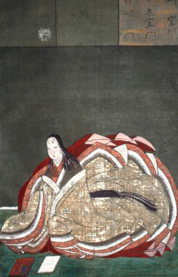
...c.978 - c.1013? Japan Literature [Murasaki Shikibu image] Potrait of Murasaki Shikibu by Kano Takanobu According to the rules of Japanese court manners one thousand years ago, it was not considered polite to address people by their personal names. Thus, the real name of the woman who wrote what is judged to be the very first novel was not recorded, (as was common for a...
Anodising
Science, Maths & Technology

Anodising

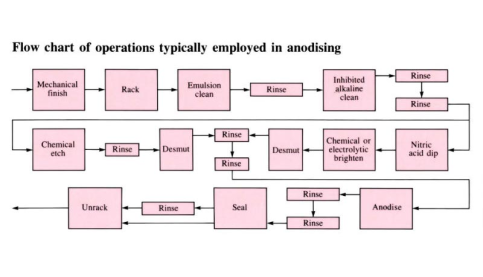
...solutions are of three main types: 10–15% sulphuric acid process at 20–25°C; rate of film formation 25 µm h-1 sulphuric acid-oxalic acid at 30°C; rate of film formation 30 µm h-1 10% chromic acid at 38–42°C; rate of film formation 15 µm h-1 Hard anodising is used to give thicker (25–100 µm) and harder (500–900 VPN) wear resistant surfaces to aluminium and its alloys – uses H2SO4 – ......
Article 10 mins