798 search results

Scotland’s ‘not proven’ verdict helps juries communicate their belief of guilt when lack of evidence fails to convict
Society, Politics & Law

Scotland’s ‘not proven’ verdict helps juries communicate their belief of guilt when lack of evidence fails to convict

...forensic evidence that could link Auld to Amanda’s death, he received a “not proven” verdict, which meant the jury deemed there was insufficient evidence to prove his guilt. Despite this acquittal, Amanda’s parents sued Auld in the civil court, and he was ordered to pay £50,000. This third verdict, unique to Scots law, has long been controversial. High-profile...
Want to achieve your goal? Try our Personal Best tool
Health, Sports & Psychology

Want to achieve your goal? Try our Personal Best tool

...psychology to tackle your own everyday goals. This tool will allow you to set a simple measurable goal such as exercising 3 times a week, or saving £500 in 6 weeks. When you set your target, the tool will calculate what you have to accomplish each week in order to achieve it. You need to be able to quantify your goal making sure that it is specific, measurable,...
Key Ideas in Therapy
Health, Sports & Psychology

Key Ideas in Therapy

...Psychology at the Open University, and Damn Fine Media. Beyond Individual Therapy Originally most forms of psychotherapy focused on the individual client and their individual problems. However later researchers stressed the importance of looking beyond the individual - to their relationships and to the wider social systems they live in. The ‘systemic view’ is...
Should human conditions be classed as illnesses?
Health, Sports & Psychology

Should human conditions be classed as illnesses?

...psychology division of the British Psychological Society has come out against this medical approach, challenging the idea that such conditions can be classified as illnesses which should mainly be treated with drugs . These psychologists propose an alternative model in which challenging social and psychological factors are seen as causing mental health problems. From this...
Extreme endurance performances – who, what and why?
Health, Sports & Psychology

Extreme endurance performances – who, what and why?

...psychological, physiological and sociological perspectives to gain an understanding into the events and the people who compete in them...This free course explores what we mean by ‘extreme endurance performance’ and why increasing numbers of people are attracted to these events. What is it about extreme feats of physical activity that motivate people to participate in...
Trust in the Workplace
Health, Sports & Psychology

Trust in the Workplace

...Psychology to Work hub we have many rescources to help you explore managing trust...The theme of trust at work presents one of the five main priorities in the Applying Psychology to Work hub. Our research highlighted that many organisations were contemplating actions that would potentially impact their employees’ wellbeing, job security and uncertainty about the future....
Methods in Motion: A view from a train
Health, Sports & Psychology

Methods in Motion: A view from a train

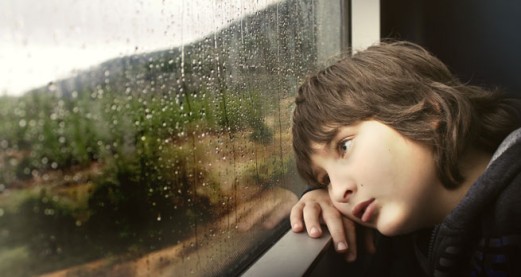
...psychology? Paul Stenner, Professor of Social Psychology, investigates the history of movement in Physics, and considers what it means for Social Science...[A child observes the world through a window of a moving train] The key question to answer when thinking about method is ‘how do we know?’ But what has the idea of ‘being in motion’ got to do with knowledge and...
Get outdoors and get active
Health, Sports & Psychology

Get outdoors and get active

Designed to inspire outdoors activity while you carry on learning, our fun ideas cover a range of subjects from nature, psychology and astronomy, to health and wellbeing. Take a digital detox from screens and notifications with OpenLearn.