798 search results

How can corporations reduce digital carbon footprints?
Nature & Environment

How can corporations reduce digital carbon footprints?

...energy, the rate of growth might indeed slow from exponential to simple linear models. Organisations might be tempted to consider digital carbon footprints inconsequential when compared to other parts of their business but given the points above and the continual digital transformation of entire industries, this would be a miscalculation. The opportunity presented by...
Reducing the carbon footprint of on-premises IT
Nature & Environment

Reducing the carbon footprint of on-premises IT

...energy road to decarbonisation, we should all adopt more carbon and environmentally conscious attitudes to purchasing and disposal, since this will have the greatest collective impact for years to come. Working with procurement, IT managers can significantly cut the embodied carbon cost of their assets through a circular IT approach to extending technology lifetimes,...
Bill Hare - Stories of Change
Nature & Environment

Bill Hare - Stories of Change

...energy? BH: I guess in the mid-1980s I got interested in the issues to do with energy and climate actually, I was already became aware as a consequence of a US Department of Energy Assessment of CO2 on climate change and energy that was referred to me by scientists at the CSIRO at that time in Australia that I began to wonder about the whole problem of climate change. RH:...
Light: Wave-particle duality
Science, Maths & Technology

Light: Wave-particle duality

...energies remained the same. Decreasing the wavelength of the light, however, caused the electrons to be emitted with a higher maximum energy. Conversely, increasing the wavelength of the light beyond a particular cut-off value (specific to each metal), caused the emission of electrons to cease. The explanation was that light interacts with matter as if it is composed of a...
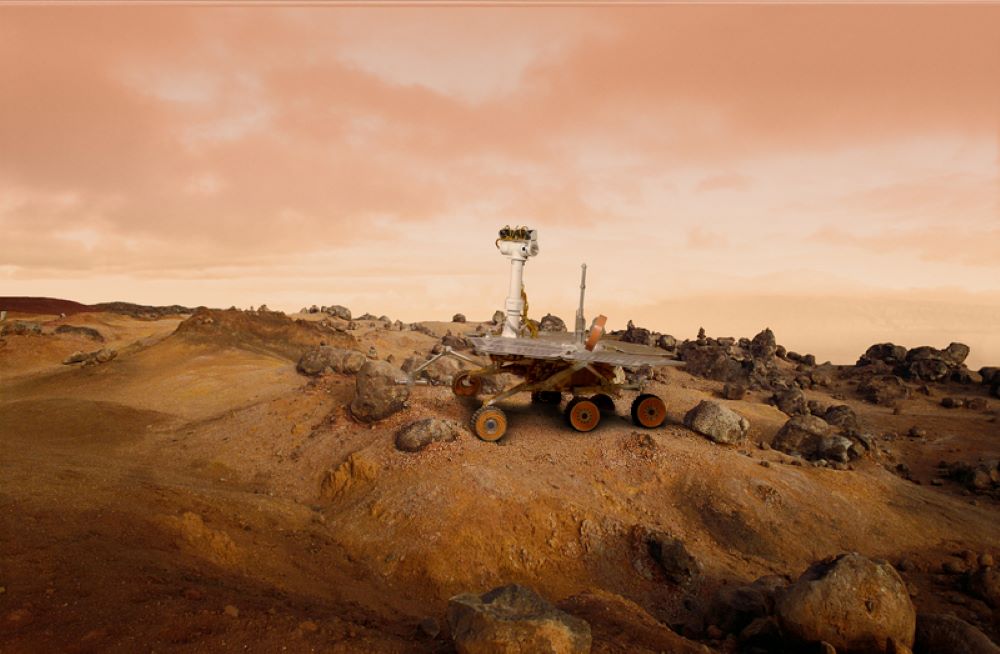
Planetary Protection of Mars
Science, Maths & Technology

Planetary Protection of Mars

...Solar System bodies from contamination by Earth life and protecting Earth from possible life forms that may be returned from other Solar System bodies.​ Approaches to this taken by space agencies and mission teams have changed over the 60 years of Mars exploration and will continue to adapt to new scientific understanding of the planet and of life itself. However, the...
In the night sky - Galaxies
Science, Maths & Technology

In the night sky - Galaxies

...solar, stellar, or galactic... Identifying different types of galaxy Galaxies are categorised according to their apparent shape. These shapes are typically divided into elliptical, spiral or irregular. The shape of a galaxy gives a clue to the age and types of star within the galaxy. What happens when galaxies collide? Collisions between galaxies take hundreds of millions...
Introduction to Planetary Protection
Science, Maths & Technology

Introduction to Planetary Protection

...Solar System, it is important that we do not accidentally contaminate untouched and unspoilt extraterrestrial environments in any way. In this free course you will learn about ‘Planetary Protection’ and why it is critical for our future exploration and use of space. This course has been developed with support from the Committee on Space Research (COSPAR) Planetary...
What is aquaponics - and how can fish poo help feed the world?
Nature & Environment

What is aquaponics - and how can fish poo help feed the world?

...solar greenhouse with three large tanks of tilapia (a hardy, fast-growing fish) and 12 growbeds full of vibrant crops. One of us – Hamish – visited recently. [Aquaponics illustrations] Water goes from fish tanks to growbeds... and back again Water is pumped constantly from the tanks into the growbeds, which each contain a clever gizmo called an autosiphon, which...