1,380 search results

Getting started with Spanish 1
Languages

Getting started with Spanish 1

...writing in your language notebook the things you want to remember. We’ll give you some more tips for this such as adding examples to your notes. Enjoy the week!...Week 2: Names and introductions: 1 Saying your name - To start this week, you will learn how to say your name using the verb ser (‘to be’). Verbs: ser (‘to be’) Verbs in Spanish are conjugated; this...
Level 1: Introductory 8 hrs
Approaching poetry
History & The Arts

Approaching poetry

...writing, music, painting that we are interested in, and why they produced it. But it may also mean understanding why one particular form was chosen rather than another: why, for example, did the poet choose to write a sonnet rather than an ode, a ballad, or a villanelle? To appreciate the appropriateness of one form, we need to be aware of a range of options available to...
Level 2: Intermediate 20 hrs
How to be a critical reader
Languages

How to be a critical reader

...writing...In this free course you will focus on how to be a critical reader. Reading critically is an essential skill at university. It means being aware of your own purposes and opinions as you read and being able to recognise the writer's purposes and opinions in their writing....How to be a critical reader: Introduction - In this course you will focus on how to be a...
Level 2: Intermediate 7 hrs
Squares, roots and powers
Science, Maths & Technology

Squares, roots and powers

...writing or displaying large numbers...From paving your patio to measuring the ingredients for your latest recipe, squares, roots and powers really are part of everyday life. This free course reviews the basics of all three and also describes scientific notation, which is a convenient way of writing or displaying large numbers....Squares, roots and powers: Introduction -...
Level 1: Introductory 5 hrs
What is The Wilson Doctrine? The one minute guide
Society, Politics & Law

What is The Wilson Doctrine? The one minute guide

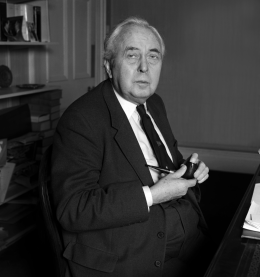
...writing] In 1966, alarmed at suggestions that security services were listening in to MPs' phone calls, then Prime Minister Harold Wilson pledged in the House of Commons that this would not happen: I reviewed the practice when we came to office and decided on balance—and the arguments were very fine— [...] that I should give this instruction that there was to be no...
Professor John Naughton On Using Systems Thinking In Practice
Society, Politics & Law

Professor John Naughton On Using Systems Thinking In Practice

...and an Observer columnist since 1987. I am now the paper’s Technology columnist writing a weekly column and occasional OpEds and editorials.” John is author of three books: A Brief History of the Future: the origins of the Internet 1999); From Gutenberg to Zuckerberg: What You Really Need to Know About the Internet (2012); and 100 Not Out: A Lockdown Diary (2020)”...
Chinese at the tip of your tongue: Culture behind the numbers
Languages

Chinese at the tip of your tongue: Culture behind the numbers

...people use one hand to signify numbers. Yī, èr, sān, sì, wŭ, liù, qī, bā, jiŭ, shí. If you want to learn how to write the numbers from one to ten on a mobile device, you can free download the Open University’s “Chinese Characters First Steps” app, following the link on the website. Dur: 3’30” Inspired? Learn beginner's Chinese with The Open University...
From old English to modern English
History & The Arts

From old English to modern English

...writing system. OE was mostly written using the Latin alphabet, supplemented by a few Germanic runic letters to represent sounds not found in Latin e.g. þ, which represented the th sounds in thin or this. (A relic of þ survives as y in modern signs like Ye Olde Tea Shoppe.) The later Viking settlements in many parts of the British Isles also resulted in substantial...