2,357 search results

Toyota diffusion (TD)
Science, Maths & Technology

Toyota diffusion (TD)

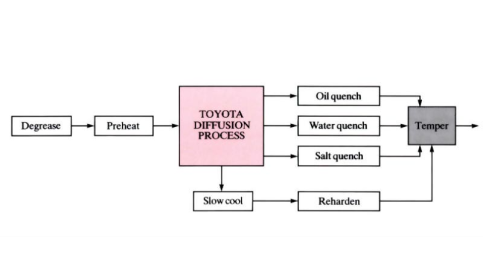
...article ] Mechanism of carbide layer formation [Images to demonstrate 'Toyota Diffusion (TD)' - see article ] TD process is based on salt bath heat treatment. Carbide layer is formed by migration of carbon atoms from the substrate to the surface, where they combine with carbide-forming elements (V, Nb, Cr) in the molten salt bath, to produce a wear resistant carbide layer...
Physical vapour deposition (PVD)
Science, Maths & Technology

Physical vapour deposition (PVD)

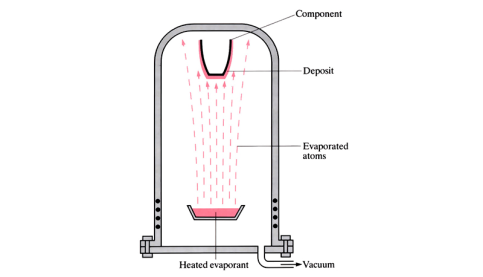
...article ] Sputtering Variations of process include reactive sputtering, diode sputtering, high energy sputtering and magnetron sputtering. [Images to demonstrate 'Physical vapour deposition (PVD)' - see article ] Ion plating Variations of process include reactive ion plating (RIP), chemical ion plating (CIP) and gasless ion plating (GIP). [Images to demonstrate 'Physical...
Thermal spraying (Hardfacing)
Science, Maths & Technology

Thermal spraying (Hardfacing)

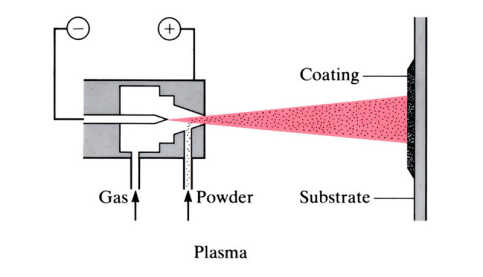
...article] Thermal processes Flame powder; flame wire; spray and fuse [Images to demonstrate 'Thermal spraying (Hardfacing)' - see article] Thermochemical process Detonation process [Images to demonstrate 'Thermal spraying (Hardfacing)' - see article] Electrical processes Gas metal arc; gas tungsten arc; open arc; submerged arc; shielded metal arc; plasma spray;...
Syria: who's involved, and what do they want?
Society, Politics & Law

Syria: who's involved, and what do they want?

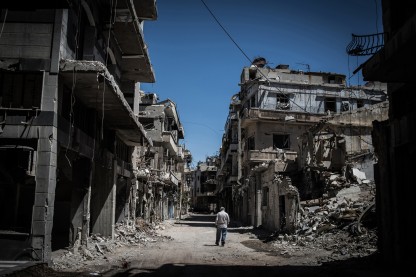
...the pressure. As Angela Merkel said: “Germany will not take part in possible military action – I want to make clear again that there are no decisions – but we see, and support this, that everything is being done to send a signal that this use of chemical weapons is not acceptable. This article was originally published on The Conversation. Read the original article....
Laser surface treatment
Science, Maths & Technology

Laser surface treatment

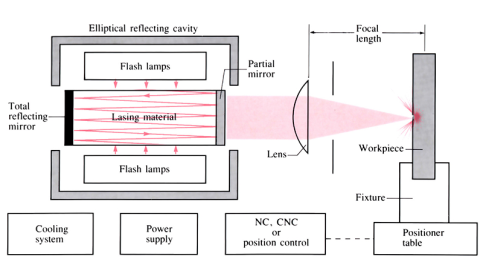
...article] Transformation hardening [Images to demonstrate 'Laser surface treatment' - see article] Cladding [Images to demonstrate 'Laser surface treatment' - see article] Manufacture Laser surface treatments offer several manufacturing advantages over other surface treatment processes: Radiation is clean and does not contaminate the surface, as with a flame. There is no...
Plasma nitriding/carburising
Science, Maths & Technology

Plasma nitriding/carburising

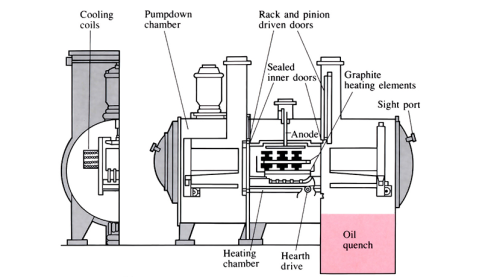
...article ] Plasma carburising Preliminary clean and degrease. Load components into basket and place in furnace. Evacuate and heat. Introduce carburising gas and strike up glow discharge. Hold until carburising is complete. Switch off gas and plasma, and hold under vacuum (diffusion period). Cool slightly (925–850°C) before transferring out of hot zone to be quenched in...
Carbonitriding / carburising
Science, Maths & Technology

Carbonitriding / carburising

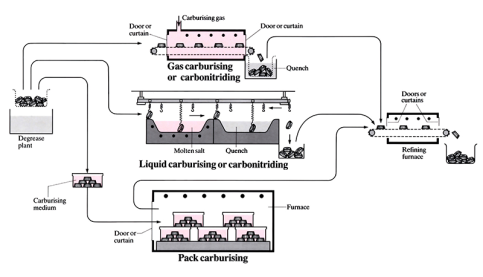
...article ] Manufacture: Gas carburising Continuous or batch furnaces which may be horizontal, vertical or rotary. More recently fluidised beds and reduced pressure furnaces have been used. The temperature is usually 925°C, although fluidised beds and reduced pressure furnaces operate up to 1050°C. The carburising atmosphere consists of natural gas or propane mixed with...
Induction/flame hardening
Science, Maths & Technology

Induction/flame hardening

...article] Flame hardening [Images to demonstrate 'Induction/flame hardening' - see article] Manufacture: Induction hardening Surface of component heated by high frequency induction, the frequency and power requirements depending on size and geometry of component and depth of hardening required. Three main types of induction machines: vacuum tube oscillator > 500 kHz spark...