769 search results

What Commercial Pilots can learn from Sports Psychology
Health, Sports & Psychology

What Commercial Pilots can learn from Sports Psychology

...psychological attributes that helps with performance in more depth...Akin to some sporting disciplines (e.g., motorcycling, Owton, 2022), aviation requires a pilot to remain cool under pressure, be attuned to a fast and constantly moving environment, thinking ahead all the time of expected and unexpected possibilities. This enhancement of sensory processing, focus and...
Public Health and Behaviour Change: from naïve sociology to naïve psychology
Society, Politics & Law

Public Health and Behaviour Change: from naïve sociology to naïve psychology

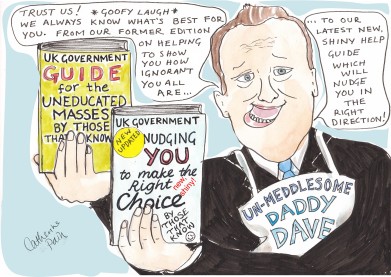
...psychology. The ‘public understanding’ of science movement imagined that a simplistic injection of accredited expert knowledge would allow people to collectively make better decisions and this would benefit society as whole whereas ‘nudge theory’ claims to know how ‘people really think’ and can influence them to behave better through ‘choice architecture’....
An introduction to the fascinating work and career options open to people with a social psychology qualification
Health, Sports & Psychology

An introduction to the fascinating work and career options open to people with a social psychology qualification

Where can social psychology take you? Here four psychologists tell us about their career journey and other work options open to people studying social psychology...Transcript Interested? To find out more about the OU’s BSC (Honours) Social Psychology and how to apply, visit our qualifications site or try our OpenLearn Social Psychology and Politics Course
Think you’re better at driving than most? How psychological biases are keeping our roads unsafe
Health, Sports & Psychology

Think you’re better at driving than most? How psychological biases are keeping our roads unsafe

...psychological research shows that many people are overconfident in their driving abilities and think it’s ‘normal’ to drive recklessly and break road laws. The number of people who are killed or seriously injured on UK roads has stayed reasonably static since 2012. Five people are killed and around 80 are seriously injured every day. Imagine the public outcry if the...
Jurors are subject to all kinds of biases when it comes to deciding on a trial
Society, Politics & Law

Jurors are subject to all kinds of biases when it comes to deciding on a trial

...psychological research (cognitive psychology, social psychology, and individual differences) to unlock the processes behind the decisions jurors reach. The aim of our recent review was to bring together different areas of psychology to identify potential sources of bias that may influence how jurors make decisions. [Autopsy of a Crime Lab | An Interview with Itiel Dror]...
Honour thy vulnerable witnesses
Health, Sports & Psychology

Honour thy vulnerable witnesses

...Psychology courses and qualifications. You see your partner, your friend, your colleague, your neighbour every day, but the moment you try to describe their face, you find yourself awkwardly falling into generic descriptions like “dark hair (dark brownish?), two eyes (brown I think), a mouth a bit full and under the nose which is slightly bigger than average”. Surely,...
Weighing up the reliability of expert criminal evidence
Society, Politics & Law

Weighing up the reliability of expert criminal evidence

...forensic and linguistic distinctions on real-life decision making...Find out about The Open University's Law courses. Expert criminal evidence reliability is a hot topic of debate these days. Depending on who you ask, decision makers who are tasked with evaluating evidence for trials are either sceptical (such as here and here) or overly trusting of it (see here, here,...
How do you read a person their rights when English isn't their first language?
Languages

How do you read a person their rights when English isn't their first language?

...psychology research. The document is being widely circulated to judicial officers, lawyers and police officers, and associations to which they belong. Some initial responses are very positive, with one Australian judge saying that she “will be referring to [it] often”. We are also asking professional organisations in linguistics, psychology and linguistics to endorse...