1,810 search results

Learning to teach: becoming a reflective practitioner
Education & Development

Learning to teach: becoming a reflective practitioner

...writing style that captures your personal views and relates them to evidence you have collected from elsewhere. Before considering the nature of reflection and the theoretical ideas that underpin it, it is worth considering why reflective practice is considered so important both within ITE and within career long learning in education. Reflection point: Think of a...
Introducing music research
History & The Arts

Introducing music research

...writings about music, you will often find a distinction made between historical musicology (the history of music and musical practices), music theory (the study of how music is constructed) and ethnomusicology (the study of music cultures). You may also encounter the term ‘systematic musicology’, frequently used in central Europe, which refers to a range of...
Level 3: Advanced 12 hrs
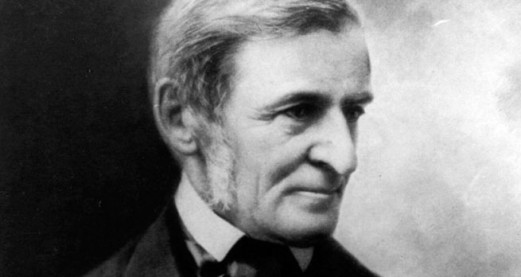
Ralph Waldo Emerson on Shakespeare's craft
History & The Arts

Ralph Waldo Emerson on Shakespeare's craft

...writing, is entitled thenceforth to steal from the writings of others at discretion. Thought is the property of him who can entertain it; and of him who can adequately place it. A certain awkwardness marks the use of borrowed thoughts; but, as soon as we have learned what to do with them, they become our own. Thus, all originality is relative. Every thinker is...
Babylonian mathematics
Science, Maths & Technology

Babylonian mathematics

...writing, some 1500–2000 years earlier still (see Figure 1). [Figure 1] Figure 1 By the middle of the third millennium BC, the writing style had evolved into the highly abstract and unrepresentational cuneiform (‘wedge-shaped’) script. This script, which was used initially for writing down words in the Sumerian language, was later also adopted by neighbouring...
Level 2: Intermediate 8 hrs
Continuing classical Latin
History & The Arts

Continuing classical Latin

...writing letters to newspapers about the use of “hopefully” and what have you. I think it’s because we are very attached to the idea of a standard written form of language, with fixed rules that we learned at school, and these somehow represent the correct form of the language. But lots of these rules we’ve learned, the kind of thing, you know, of don’t put a...
Level 2: Intermediate 4 hrs
Exploring languages and cultures
Languages

Exploring languages and cultures

...write your answers to the questions in the boxes below. Shop assistant: Bonjour, Messieurs. Dave and Si: Bonjour, bonjour, Madame. Shop assistant: [laughs] Dave Myers: Madame, Je cherche la saucisson lyonnaise pour fabriquer une grande saucisson-brioche. Shop assistant: Yes. Alors, here. Dave Myers: Oui. Shop assistant: Ha ha ha. Si King: Now, fluent. See that? What he...
Level 1: Introductory 14 hrs
Learning how to learn
Education & Development

Learning how to learn

...write a brief description of how you were learning it. Discussion This is what Tim wrote: There was a prep essay which was due before the course started. To be honest, I was really nervous. It took me ages - I kept changing the words round over and over again. I wasn't feeling very confident because I haven't written an essay for about 20 years. I started to panic a bit...
Level 1: Introductory 6 hrs
Methods in Motion: Introducing Methods in Motion
Society, Politics & Law

Methods in Motion: Introducing Methods in Motion

...creative, inventing a swathe of new practical ways of knowing about social life. Yet we at CCIG would argue that researchers must go beyond meeting the intensified demand for new methods. Methods are important because what we know is changed by how we know it. Furthermore, the reasons why someone uses a particular method are linked to their wider ends and means; what...