271 search results

Oxygen, blood and the body
Science, Maths & Technology

Oxygen, blood and the body

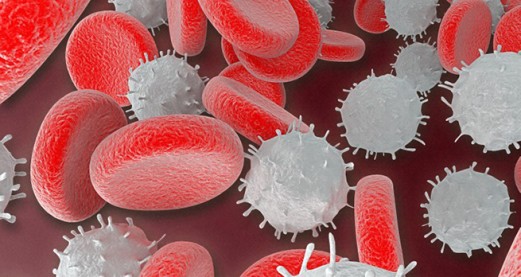
...respiration? Dr Simon Collinson explains...We all know that air is essential for human life; more precisely, the oxygen in air is essential for life. A human breathes in approximately 11 000 litres of air every day. But how is that oxygen transported into and around our blood systems and stored in the parts of our body that need it to function? And are humans different to...
Deep oceans can help us understand our climate
Nature & Environment

Deep oceans can help us understand our climate

...circulation says PhD student, Andrew McIntyre. ...[A view of Hout Bay in Kommetjie, South Africa] A view of Hout Bay in Kommetjie, South Africa There is approximately 60 times more carbon in the deep ocean than in the atmosphere. Therefore, understanding the deep ocean is of critical importance if we are to fully comprehend the role the oceans have on climate. The...
Carbon process: Photosynthesis
Science, Maths & Technology

Carbon process: Photosynthesis

...the tiny green structures called chloroplasts. These give leaves their colour, and capture light energy from the Sun. What happens next is a complex chain of reactions that can be summarised very simply. Water and carbon dioxide are converted, using the sun's energy, into simple sugars. The oxygen released in the reaction is now available for other organisms to respire....
Blood and the respiratory system
Science, Maths & Technology

Blood and the respiratory system

...respiration is so important for life, including how air enters and leaves the lungs, how oxygen is transported in the blood, the many dynamic factors that control breathing, and some diseases that affect respiration...‘Don’t hold your breath’ is an expression you’ve probably heard many times, but may not have thought too much about. In this free course, Blood and...
Level 2: Intermediate 10 hrs
The oceans
Science, Maths & Technology

The oceans

...circulation and how the oceans influence our climate...The oceans cover more than 70 per cent of our planet. In this free course, The oceans, you will learn about the depths of the oceans and the properties of the water that fills them, what drives the ocean circulation and how the oceans influence our climate....The oceans: Introduction - The oceans cover more than 70...
Level 2: Intermediate 15 hrs
Microbes – friend or foe?
Nature & Environment

Microbes – friend or foe?

...respiration. The oxygen in the air allows the microbes to respire aerobically.What are the products of the aerobic respiration of carbohydrates like glucose? Aerobic respiration can break down carbohydrates completely, producing just carbon dioxide and water (together with energy needed for the microbes to stay alive). Aerobic respiration is the most efficient way of...
Level 1: Introductory 2 hrs
How the atmosphere sustains life on Earth
Science, Maths & Technology

How the atmosphere sustains life on Earth

...circulation patterns. Atmospheric transport spreads volcanic outputs over wide areas. The climate change resulting from the atmospheric response to volcanic gases and aerosols is thought to have melted the ice in periods when Earth was deep-frozen and to have caused mass extinctions several times in the past. The atmosphere today is both a consequence of, and essential...
Fake news in Wales
Society, Politics & Law

Fake news in Wales

...circulated without any explicit intention to deceive. But misinformation can also be a major problem. Misinformation refers to false information which is circulated without any explicit intention to deceive. In these cases, it’s more a matter of ineptness, accident or lack of care. It’s when false statements made by those who should know better are reported upon,...