

Course planning
Guiding principles of an OpenLearn course
There are a number of guiding principles for OpenLearn courses, we have a wide range of courses on the platform and this is inline with our users and OU guidelines.
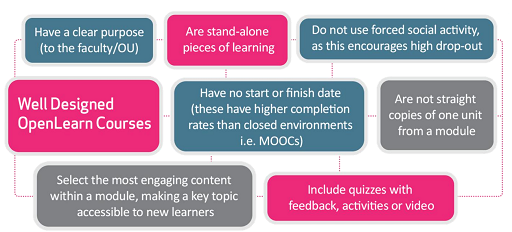
- Each OpenLearn course has a clear purpose (to the OU/Faculty) and is always a faculty led endeavour. We require a specification form to be completed which has faculty sign off as well as sign off for publication.
- All OpenLearn courses are stand-alone pieces, whether they are derived from module materials or a completely new piece of learning. Each course is developed with an OpenLearn Editor to make sure they work within the OpenLearn structure and are created for OpenLearn users.
- OpenLearn is a solo learning platform, there is not social engagement or social activities that can be undertaken on the platform. This will be something that is key to activities in your course and the use of forums can not be used on the platform.
- OpenLearn courses are always open. We do not have start and closure dates on our courses, we regularly make changes and review courses but we are able to this live on the platform without disrupting users progress. If your course requires large amounts of updates, we would need to schedule this and potential close the current course and replace with the updated course in it's lifecycle.
- We do not have straight copies from a module, the OpenLearn course structure is different to how module production is created and displayed to learners on the platform. We are able to reuse content from modules but we are not able to use whole sections or straight copies of content.
- We find that quizzes and activities with feedback have the biggest impact to our learners, on all our BOCs we create quizzes with feedback so that learners are able to understand how they passed or failed a question.
- Accessiblity is a key aspect of all OpenLearn courses, we require that all images have a figure description, vidoes have transcripts and we also limit the amount of interactives on the site due to limitations on accessible versions.
Key findings from OpenLearn users:
- Learners most value quizzes with feedback
- Use of activities and video also highly rated
- Users prefer engaging content within the course - interactive, images, AV
- Make a key topic accessible to new learners
- Course needs to work as a stand-alone piece of learning
- Learners value recognition for their achievement (Statement of Participation and/or badge)