

1.1 The basic reproduction number R0
An important concept in epidemiology and modelling is the basic reproduction number (R0). When a person is infected with a disease, there is a period of time when they can transmit the infection to their contacts. The basic reproduction number of the infection is the average number of secondary infections that result from one infected person. This definition is represented in Figure 2.
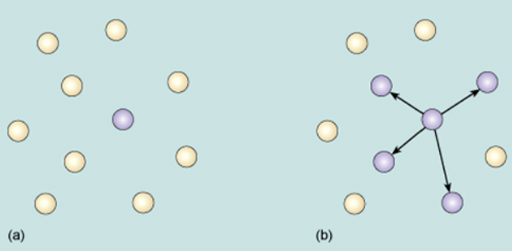
The basic reproduction number is neither a risk nor a rate: it is just a number. It can take any positive value (or zero) and it specifically assumes that all contacts are potentially susceptible to infection. For most diseases this is clearly not true. While it was true at the start of the COVID-19 pandemic, resistance to reinfection gradually built up in the population as increasing numbers of people were infected, recovered and developed some immunity. Later on, the number of susceptible individuals was drastically reduced by the COVID-19 vaccination programmes.
Despite its theoretical nature R0 is a very useful measure, because it allows comparison of the infectivity of different pathogens or different strains of one pathogen. It is also a key parameter in determining what proportion of the population must be vaccinated in order to stop a disease spreading – this value is called the critical immunisation threshold (qc) and we will return to it later this week.