
7 Stop and search, ‘SUS’ and public disorder in the 1980s
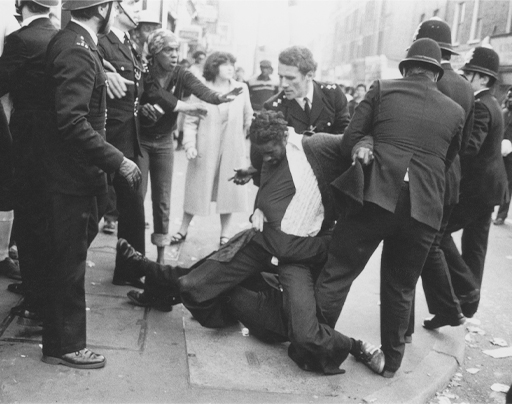
The 1980s remained a time of overt racism in parts of Britain. It is therefore perhaps not surprising that such attitudes were also still in evidence within policing, contributing to low levels of trust and cooperation between police forces and Black and Asian communities.
Activity 5 Racism in Britain during the 1980s
Listen to the audio and video clips below and consider the following question:
What do these two historical sources suggest to you about the context of the policing of Black and Asian communities during the 1980s?
Clip 1: In this clip, the UK’s first Black headmaster of a secondary school, Carlton Duncan, discusses his experiences of racial abuse in the school.
Clip 2: In the second, Les Curtis, Chairman of the Police Federation, being interviewed on the BBC’s Panorama programme, comments on the use of racist language by police officers. This second clip also includes evidence of prejudicial attitudes from other police recruits at the time (1983).
Against this backdrop of casual racism, the police forces of major cities made frequent use of both stop and search powers and powers under Section 4 of the Vagrancy Act (dating from 1824). Usually, arrests were made under ‘sus’ powers on the grounds of ‘loitering with intent’ – i.e.: being pre-identified as a suspicious person and then doing something suspicious.
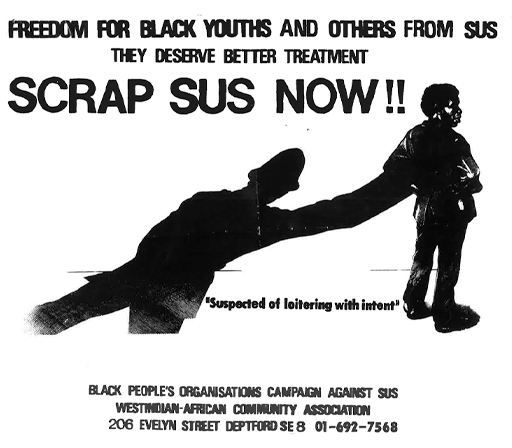
These extensive powers were used disproportionately against young Black people, particularly in London, with 50 per cent of all arrests on these grounds made against under 21s, leading to a further deterioration of police relations with Black communities in major cities.
It was against this background that the Metropolitan Police launched Operation Swamp 81 in Brixton – a campaign during which they stopped and searched c.1,000 people in 5 days. This action precipitated several days of rioting with unprecedented levels of violence. Unlike the Notting Hill Riots of 1958, which had been between Black and white youths, in Brixton the battles were primarily between members of the Black community and the police.
- The largest clashes took place on Saturday 11 April, with 279 police officers and 65 members of the public injured.
- The summer of 1981 saw similar rioting in Toxteth in Liverpool, Moss Side in Manchester and Handsworth in Birmingham.
Following the riots, the government commissioned an enquiry led by Lord Scarman. The Scarman Report was a significant moment for policing and for race relations more broadly. It recognised that the riots were, in part, due to historic ‘racial disadvantage’ and acknowledged the role played by police use of stop and search. Scarman’s report recommended changes to police training, community liaison and complaints processes and led, in part, to the Police and Criminal Evidence Act (1984). But, the report did not find evidence of institutional racism on the part of the Metropolitan Police, and many of the initiatives begun around Racism Awareness Training and statutory community consultative committees were patchily implemented at best.
While the Scarman Report began to recognise the issues faced by policing, tensions continued throughout the decade.